Windows 7 Deployment Learning Portal


Windows 7 deployment is definitely a hot topic. The larger/more technically minded end end users are looking to get their IT teams skilled up and more Microsoft partners than ever before are looking to acquire these skills, and offer the services. Add into this the number of consultants and techie home users and there’s a real appetite for information across the board.

Microsoft have already made a lot of great information available via Technet as well as the MS Press books etc. For me, although Technet is great, I do sometimes struggle to find what I need for a certain situation/question and end up none the wiser. I also like online exams as a way of testing/tracking my level of knowledge, and also my (hopeful) improvements. Thus, I got pretty excited (more excited than a Rydberg atom in fact :-)) when I discovered the

Windows 7 Deployment Learning Portal

It’s aim is

“to help you identify the strengths and gaps in your knowledge around Windows 7 deployment and provide some targeted learning to help you reach the top of your game”

and, in my opinion, it does just that…and very well too. Going through the 11 modules showed me there were a few areas that I was already quite strong in as well as a number of modules I needed to work on. <—This is where the targeted Technet materials came in very handy. Rather than leaving me to my own devices, after each question I answered incorrectly there were a few links to specific Technet pages relating to the topic in hand; I was able to quickly read up on the subject, identify my mistakes, find the right answer and then re-take the module.

image

image

Learning Style

I really like the way that Microsoft Technet have approached this site. It’s much more about identifying, and then filling, any knowledge gaps you may have rather than simply passing/failing an assessment; this is a much better approach for all involved.

I failed a few of the modules and hugely benefitted from being able to read through the Technet articles straight away, and then re-take the modules. Once I’d read through the various suggested articles including how to guides/step by step procedures etc, I passed each module but, more importantly, retained the knowledge. If it had simply said “You’ve failed”, I wouldn’t have improved my skill levels anywhere near as much.

For anyone looking to become more au fait with Windows  deployment methods, be it for personal interest or work necessity, this site is a great place to start. Equally, if you’re looking (as I am) to complete the Windows 7 70-680 exam, there is a wealth of information available through this site and I would definitely recommend it! On the subject of the 70-690 exam, Microsoft are running an:

Early Bird Promotion

“The first 150 individuals to pass all modules will receive a free Microsoft Press Microsoft Certified IT Professional (MCITP) self-study guide. The first 500 individuals to pass all modules will receive a free certification exam voucher.”

I have no idea if it’s still within the 150 pass limit (or the 500 for that matter) but if I was you, I’d head over to:

http://technet.microsoft.com/en-gb/windows/ff470986.aspx

get registered and get taking those modules. Worst case you get a great, solid grounding in Windows 7 Deployment tactics and best case you’ll get some great free gifts 🙂 Friendly word of advice, make sure you select the “I want to be included” tick otherwise you won’t be eligible for the free book or voucher 😉

I hope you have fun over there and I just want to say, Thank You Microsoft Technet, for a great resource 🙂

Microsoft to end Itanium Support


Microsoft have announced that the next versions of a number of their products will cease to support Itanium processors; making:

Windows Server 2008 R2
SQL Server 2008 R2
Visual Studio 2010

the last to support the Itanium architecture.

The reasoning behind this is that 64-bit processors & servers are now so hugely scalable that Itanium, as a solution for massive data-centers/high performance clusters etc, is simply no longer needed.
With both Intel & AMD releasing 6/8 core CPU’s and a servers with 8+ processors being offered by a dozen manufacturers, 64+ core boxes are available & close to becoming common. Windows Server can handle 256 logical CPU’s and so is perfectly placed to look after the datacenter.

Support
Itanium users need not worry though, Windows Server 2008 R2 is fully supported until July 9th 2013, then going into extended support until July 10th 2018; so Microsoft aren’t abandoning anyone!

See the full post here:

blogs.technet.com/windowsserver/archive/2010/04/02/windows-server-2008-r2-to-phase-out-itanium.aspx

Microsoft Volume Licensing Service Center (VLSC) 3.5


The change to VLSC (from eOpen & MVLS) in December 2009 didn’t go as smoothly as anyone hoped, with a couple of weeks of downtime, various issues and ongoing user confusion over the last 4 months. You can see the full run down of issues, as well as partner and customer comments here:

Read Microsoft Volume Licensing Service Centre (VLSC)

but this post is to cover the changes that are coming in April 2010 with VLSC 3.5.

Current VLSC

I’ve used the VLSC a number of times from the viewpoint of both a partner, and a customer and one of the biggest problems is the new layout. The location of menu options isn’t always particularly intuitive, leading to a lot of “random clicking” and menu surfing; clearly not what anyone wants. This has led to a lot of frustrated customers, angry that things are more difficult than they used to be, especially as most customers don’t enjoy licence management anyway!

Feedback

Microsoft ran a series of feedback sessions with customers and partners via Live Meeting, Phone interviews etc to see what problems people were experiencing and how they would change it.

I took part in one of the usability scenario Live Meetings, which involved me performing various tasks in VLSC while the Softies observed (Live Meeting Share Desktop feature FTW!). There were a few instances where, even though I’d done it before, I couldn’t remember where certain functions were and resorted to clicking through all the menus! I felt that the people in the meeting really were listening to what I said and that they really valued my feedback…the fact that a couple of the changes I suggested have now been implemented show this to be true 🙂

VLSC 3.5

VLSC 3.5 is being rolled out this month (April 2010) with a number of changes, facelifts and new features including:

Improved Navigation Bar:

The 2 main things customers need/want to do in VLSC are:

Download product media

Access licence keys

Under the old menu, it isn’t 100% clear where these are located but the new VLSC gives 2 new menu choices, just for these actions.

Improved Key Management:

There are a number of changes and improvements being made here with 2 of the biggest being:

Enabling customers to download all their VLK’s (Volume Licence Keys) to a local file, giving them easy offline access to all their keys. This will be a huge benefit to just about everyone 🙂

Providing the ability to see VLK’s relating to a specific licence ID. When companies have dozens of agreements, it can often be useful to see which keys relate specifically to which ID’s…and thus perhaps to which orders.

Manage on Behalf of:

This is a great change for Partners. Often we’ll get customers who don’t want to be involved with the day to day management of VLSC and so they ask us to “look after it” for them.

The new “Add Open Licence” feature gives non-administrative rights to the agreement, enabling partners to:

  • Download media
  • View VLK’s
  • Manage SA benefits

and more.

You can see the whole range of changes and more information over on Eric Ligman’s blog here:

http://blogs.msdn.com/mssmallbiz/archive/2010/03/29/announcing-microsoft-vlsc-3-5-with-add-open-license-coming-in-april.aspx

Although the initial launch of VLSC was something of an issue, Microsoft have done a great job of asking the right questions of the right people, listening to their feedback and implementing it in a timely manner. It’s great to seem them listening to customers and partners and taking action on what we say… 🙂

If you’ve had issues with the VLSC I’d love to hear what you think of these new changes…especially if you commented on my original VLSC post in December.

Will they make your life easier, are there any changes you’d still like to see?

Windows Phone 7


Not often is the end of a series welcomed by all, especially when it hasn’t even started yet…but this is different. Microsoft’s upcoming mobile OS is now officially titled:
“Windows Phone 7”
The previous name was a bit of a mouthful and I don’t think I’ve ever heard anyone use the whole title anyway, so it seems like a good move to me…the reaction on Twitter has been positive so far too
Now we just need it to be released…and be better than Android 😉

Bringing together the Android-o-Sphere


I’ve recently moved over to the Android mobile platform and I’m pretty happy with it…it’s full of cool apps, e-book readers and fancy widgets. However, the biggest problem is fragmentation of the Operating System…there are currently 4 different Android OS releases in the market:

1.5

1.6

2.0

2.1

The big thing is that certain apps only work on certain versions, and that, my friends, is disappointing! One of the major apps that attracted me to Android was “Google Goggles” but, 4 months later I still haven’t used it 😦 Goggles is an Android 2.0+ app and my phone, the HTC Hero, is an Android 1.5 device. I knew that when I bought it but I had also been led to believe that an upgrade was imminent…like before end of 2009 imminent. It was then “sometime it January” and, after a period of silence, it was “by the end of March”. It’s now being reported by MSN & Engadget that HTC will roll out the update to 2.1 on April 26th in Taiwan, with the rest of the world following shortly after. I hope that happens as I think then, Android will truly realise it’s potential…and I’ll get to have all kinds of fun 🙂

It’s not just Goggles…other apps I’m missing out on include:

Flyscreen (1.6+) (adds apps to lock screen)

Gesture Search (2.1…now backported to 1.6)

Google Earth (2.1 only) <—This is a proper WTF decision…why isn’t Google Earth available to ALL owners of Google phones?!?!

and I’m sure countless more.

However, according to Engadget, Google are on the case…by splitting the OS up even more. At first I was like “What the WHAT?!” but having RTFA it does make sense:

Google “will start by decoupling many of Android’s standard applications and components from the platform’s core and making them downloadable and updatable through the Market”

This means that one wouldn’t be at the mercy of the manufacturer (HTC etc) or the carrier (AT&T etc) when new shiny bits were released for Android…you could just go and get it. That would be brilliant 🙂 This seems to be codenamed “Froyo” and then a later version will “Gingerbread”.

I’m not a great fan of Google but I do think that Android is the best Mobile OS currently available, and this appears to be a good solution to a very annoying problem. So 1) Hurry up HTC and get me onto 2.1 and 2) hurry up Google and implement this to prevent such disparate lag between users & devices.

Read the full scoop over at Engadget here.

Microsoft Online (BPOS) Update March 2010


Microsoft have once again brought out a raft of changes and improvements to their online BPOS offering, these include:

25GB mailboxes for all users: Self explanatory really 🙂

Increased Sharepoint Site Collection Max. number: No longer limited to 20 site collections, organizations can now create up to 100 site collections!

Attach Files to Service Requests: You can now attach files to service tickets you open through the admin console. Max. file size is 5MB, max. total file size is 20MB and max. number of attachments per ticket is 20. I’ve never needed to do this but I can imagine it would be very hand in certain cases…sending screenshots etc.

Mac OSX Support: The Sign-In client now supports Mac OSX.

You can see the rest of the enhancements over at the MS Online Blog.

Office Communications Server (OCS) 14


Microsoft have given the first public views of Office Communications Server (OCS) 14 and it seems to be following the social networking/integration path of Office & Sharepoint 2010.

One thing that I like the look of is:

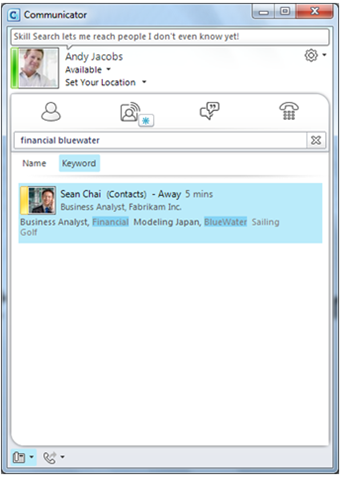
Skill Search

Employees enter their skills/interests into their Sharepoint profile and these are then searchable from OCS 14.

This really ties into how a lot of people use OCS/Communicator most of the time, especially Microsoft employees. Say I ask a question about Sharepoint 2010 and my contact doesn’t know, they jump into Communicator and ping a quick IM to the relevant person. For a major product like Sharepoint, it’s quite likely that they’ll know who they need to speak to…

But let’s say I ask a question about co-authoring in Live Web Apps or configuring shared mailboxes in Exchange Online, there’s a good chance that they won’t know who they need to talk to:

image

Do a quick search for “BPOS”, “Live”, “web apps” etc and bada-boom…person found 🙂

The Office Wave 14 products are all aimed at making collaboration a much easier, attractive proposition to users with Sharepoint as the Central hub (save to Sharepoint, Office Web Apps etc). One of the other key tenets is increasing productivity and Skill Search fits into that perfectly 🙂

There’s no mention of if/when a public beta of OCS 14/2010 will be released but MS did reveal that the Technical Adoption Program (TAP) kicked off “days ago”.

OCS 2007 R2 did a good job of introducing a lot of the features that users had asked for, and it seems that OCS 2010 is bringing it in line with Web 2.0 and Social Media…which now is definitely what users want.

Info and picture courtesy of ZDNet

Should I buy an iPad?


Should I Buy an iPad

Yep – pretty much sums it up 😉

Saw it here.

Microsoft VDI Licensing changes


Microsoft have made some changes to their licensing, specifically aimed at making VDI adoption easier and more cost effective.

VDI with Microsoft is done via VECD (Virtual Enterprise Centralised Desktop) and there are 2 types of VECD licence available, one for machines without Software Assurance and one for machines with SA, priced at:

  • VECD (for users without SA) = $110 per device per year
  • VECD for SA (for users with SA) = $23 per device per year
  • So, although greatly reduced, there is still an extra cost on top of a customer’s investment in Software Assurance.

    However, from July 1st 2010, Software Assurance for Windows Client will include the VECD licence at no extra charge; simultaneously reducing the barriers to VDI adoption and increasing the amazing benefits and ROI that Software Assurance offers…good work Redmond!

    Also from that date, machines without SA will be covered by a Virtual Desktop Access (VDA) licence, priced at $100.

    July 1st also gives customers licensed with the above the rights to access their virtual desktop from secondary, non-corporate machines such as home PC’s, hotel machines etc.

    Microsoft & Citrix “Rescue for VMWare VDI” Promotion


    Alongside the new RDP/VDI enhancement, there is a new promo being kicked off called:

    Rescue for VMWare VDI

    For customers currently using VMWare view:

    “eligible customers can trade-in their VMware View licenses with same number of Microsoft VDI Standard Suite subscription and Citrix XenDesktop VDI Edition annual licenses, up to a maximum of 500, at no cost

    At no cost!!! There are of course caveats and restrictions:

    “Customers with existing VMware View licenses for desktops covered by Microsoft Core CAL or Enterprise CAL suites with Software Assurance through Select, Enterprise & CASA (Campus & Schools Agreements)   family of agreements can take advantage of this offer. Determination of eligibility will be done by Citrix and Microsoft sales representatives”

    *(bold mine)

    So:

    Customers on:

    • Open
    • Open Value Perpetual
    • Open Value Subscription

    cannot take part in this promotion…which seems a little odd to me. I’d be interested to hear the reasoning behind this…

    Also, even if you are on one of the chosen licensing schemes but have chosen to purchase CALs individually, you are unable to take part.

    For those who are eligible, this promo is available until December 31 2010.

    You can see more on this, and other joint efforts, over at:

    http://www.citrixandmicrosoft.com/