Announced at Microsoft Ignite 2020, Power BI Premium has a new “per-user” licensing model. Previously available only via a “capacity” model, at a pretty high price point, this new licensing option will make it more cost effective for companies to get started.
The main reason I talk to people about Power BI Premium is licensing. With Power BI Pro, EVERY user consuming a dashboard need a Pro license – which can get pretty expensive pretty quickly. Power BI Premium per Capacity removes the need for each user to be licensed with Pro meaning, even with it’s high monthly cost, it can work out more cost-effective for heavy use cases.
While there have been feature differences between Pro & Premium, they’ve not been a reason for these conversations – now however, it looks as though that Microsoft hope that may change. This new licensing model makes it easier, and cheaper, for smaller orgs and teams of developers to access the high-end Power BI Premium features. Perhaps this is an effort to compete further with Salesforce Tableau et al.
To access content in a “Premium per-user workspace”, each user must have a “Premium per-user” license so the licensing, in a nutshell is:
If you want to get access to the additional Premium features for named users, Premium per user (PPU) is the way to go.
If you want to allow unfettered access to dashboards without worrying about per user licensing, Premium per capacity is still the answer.
Getting access
Whilst in preview, Power BI Premium per-user will be free of charge. Regarding eventual pricing, Microsoft said in their announcement:
Premium per user will be uniquely affordable and highly competitive among individual user offerings in the industry. Stay tuned for the official pricing announcement as we get closer to the GA timeframe. I guarantee you won’t want to miss it.
The “further details” link below has a well moderated comments section which features several answers from Microsoft clarifying some of the common questions too.
Only a few additions again this month but a couple are pretty interesting.
Azure DevOps Server 2020 is added.
Dynamics 365 Sales Premium is added. This is a new SKU that combines the “Sales Enterprise” and “Sales Insight” licenses for £101.80 per user per month – a saving of £7.50 pupm. Naming wise – I’m not sure that having an “Enterprise” SKU inside a “Premium” SKU really makes sense tbh!
Azure SQL Edge is added. This is a new variant of SQL made for the cloud world with features including:
Azure Stack Edge appears too – this is a physical device you keep on-premises, like a branch office or field location, to “filter, analyse, and transform your data before it moves to Azure”. Lose/damage one and it’s a $40,000 charge!
A new variant of SQL – Azure SQL Edge – is available in public preview and was added to the Product Terms in September 2020.
What is it?
This new flavour of SQL is made for the emerging, growing world of the cloud and edge computing – something of a focus for Microsoft over the last couple of years. Azure SQL Edge is based on SQL Server for Linux and, although it contains only a subset of the full functionality, it also includes features not found in SQL Server for Linux or Windows.
It supports both Intel and ARM processors and runs in containers, currently the only supported scenario is Docker hosts running Ubuntu 16.04 LTS or 18.04 LTS. New features include built-in data streaming and in-database machine learning.
When would you use it?
Microsoft say it is aimed at “edge scenarios” – primarily Internet of Things (IoT) – and it allows data to be analysed and processed before it gets to the central infrastructure; this can lead to faster results and also reduced cloud and network bandwidth utilisation. This latter point is an often overlooked aspect of working with the cloud – more data moving around more places means more network usage and, in many cases, more cost too.
“You don’t need an army of database administrators to install and manage SQL Edge on all your edge devices”
As Azure SQL Edge is container-based, you can deploy it from one portal and then simply update the container as needed. If this is indeed the case, it will help with the “do more with less” approach that comes with cloud – where you can easily end up with many more servers and assets than on-premises, without a matching increase in head count!
Pricing
It’s in Public Preview at the moment, meaning it can be used at no cost (in areas where Azure IoT Edge is available) and more details on pricing and purchase model will be released once the preview is over.
*Update – Feb 2025*
Unfortunately, Azure SQL Edge is being retired by Microsoft as of September 30th, 2025.
Microsoft recommend migrating to:
SQL Server Express
SQL Server Standard
SQL Managed Instance enabled with Azure Arc
None of which are particularly similar to the Edge edition.
This whole Microsoft buying TikTok thing strikes me as very strange…I don’t see that it would be successful for anyone involved. The rumoured price tag of $30 – $50 billion means it’s not something you can take a punt on – even with Microsoft’s revenues and profits, that’s not a trifling sum of money!
Xbox aside, Microsoft don’t have a great track record when it comes to consumer products – Skype brand recognition seems to have dropped off massively since MS’s acquisition, Windows Phone (as awesome as it was!) never properly made it, and earlier in 2020, Microsoft shuttered “Mixer” – their game streaming platform – less than 4 years after acquiring it.
While it’s fair to say that Microsoft are now (again) considered a “cool” company, that’s a relative statement…being “cool” to 30+ year old people in tech roles who use LinkedIn is not the same as being “cool” to teenagers!
Any attempts to “Microsoft-ize” the platform would surely be the beginning of the end of TikTok’s success – causing the big users (and thus their millions of followers) to migrate to the next platform (i.e. Triller) and reducing the available data…which may be the focus of the purchase. Even if they let it run as a totally separate entity, I can’t help but wonder if just the fact it’s owned by Microsoft would be enough to put the core users off?!
Distractions
Another problem with this purchase would be the distraction it causes. Microsoft have done a great job under Satya Nadella of becoming a “true” Enterprise company – very focused on business, their customers, their goals, and their roadmap. Bringing TikTok into the organisation will distract pretty much every aspect of Microsoft:
Leadership – potentially opening them up to a whole world of scandals and issues around content, censorship, election interference, cyber-bullying, data breaches and more. Things which surely Microsoft would rather stay clear of?
Staff with new colleagues and new (or unclear) corporate strategy. Will they be side-lined for this new consumer focus? Will this affect their career path or budgets or bonuses etc.?
Customers – what does this mean for Microsoft’s strategy going forward? I’m sure some execs will start to wonder if it’s a good idea to bet their 10-year cloud strategy on the company that owns TikTok – are they the fully committed enterprise partner they want and need? Will they try and merge TikTok with Microsoft 365 and/or Dynamics 365?
I also think it will give so much ammunition to competitors like Amazon, Google, Oracle, Salesforce. They’ll be able to market to customers playing on the change in Microsoft’s direction, their lack of focus on business needs and enterprise customers, and the idea of having TikTok videos within business communications.
While data is massively important these days, and Microsoft will clearly have one eye on the future of tech and the company itself, I’m of the opinion that buying TikTok would be a mistake. Yes, they’d have access to many many millions of consumers…but would Microsoft really be able to make much use of them? I can’t see that direct advertising would work at all so one has to assume it’s more about data mining a la Facebook – I’d suggest that staying away from being tarred with that brush would serve Microsoft well in the long run.
Other options
Walmart have thrown their hat in the ring and are apparently looking to team up with Microsoft to purchase TikTok. This makes more sense than a solo Microsoft bid – US grocery retailers have been some of the leaders when it comes to mining and using consumer data with targeted vouchers/offers etc. This would give them a huge amount of extra data…for a new generation of consumers who, to a large degree, buy different things in different ways for different reasons than the generations before them.
Reports say that Walmart were already working with SoftBank to put a deal together but the US government pushed back due to a lack of cloud technology – hence the move to join with Microsoft.
Alternatively, Oracle are apparently also in the running to acquire TikTok. As much as I can’t really see it fitting into Microsoft, I definitely don’t see it fitting into Oracle. Again, I’m sure it comes down to access to data but I’m also sure that Oracle’s involvement would kill it even faster than Microsoft!
Who will eventually win out is unclear at the minute. The Trump administration has been oddly involved in this whole thing – in fact, they’re the reason it’s even happening – and that may influence the eventual new owner. Oracle have close relations with Trump – Safra Catz was on his transition team back in 2016 while Larry Ellison hosted (but didn’t attend) a fundraiser for Trump earlier in 2020.
Towards the end of 2019, Microsoft announced the ability for users to “self-serve” when it came to purchasing Power Platform licenses. This allowed users to buy licenses directly in the portal, circumventing central IT although, after much kerfuffle, Microsoft made it possible for organisations to turn off this feature.
Microsoft have now added Project & Visio Plan 1 & 3 licenses to the self-serve roster – clearly this is a purchasing channel they’re keen to continue exploring. In several areas, Microsoft appear to be slowly moving towards more direct sales models, a la Salesforce, and this is part of that approach – building up loyalty and customer stickiness among the users, regardless of what the overall company stance may be.
Find more info on how to allow/deny this capability here.
Microsoft had, as expected, a great Q4 with revenue up 13% to $38 billion, which closed out an equally good fiscal year. Overall revenue of $143 billion, and operating income of $44.3 billion, was driven by revenue increases in all Microsoft’s key areas:
Office 365 was up 19%
Dynamics 365 was up 38%
LinkedIn increased by 10%
Azure was up 47%
Although the Azure growth was lower than previous quarters, it still seems healthy enough for now.
Microsoft called out some interesting points during their earnings call, some of which give a good indication of future direction including:
Slowdown in transactional licensing and flat on-premises server revenue: While this may be down, at least in part, to the impact of COVID-19 – it is also where Microsoft are heading. This is also shown by the fact that Office Commercial (on-premises Office) was down 34% -which Microsoft attributed to a combination of COVID-19 and the move to annuity licensing.
As long as those transactional licenses and on-premises server software are being replaced by CSP, Microsoft 365, and Azure – Redmond will be happy. I’ll be keen to see if this numbers start to rise again as the economic situation stabilises.
Bigger, longer Azure contracts: They stated “material growth” in Azure contracts over $10 million which is good news for Microsoft. For everyone in this new subscription based world, locking customers in to longer term deals is a key aim as it makes it easier for the vendor to forecast and budget.
Increased ARPU for Office 365: Average Revenue Per User (ARPU) is a key metric for many of today’s organisations and an increase means Microsoft are making more money per user. This could be as they upgrade to higher level plans (E3 to E5 for example) or purchase add-ons to their existing licenses. The Office 365 seat count increased and the ARPU increased, which are both positive for Microsoft.
All in all, a very positive performance from Microsoft that clearly shows their focus on cloud continues to pay off. Looking ahead to this financial year, FY 21, I think we’ll see more focus on E5 – particularly for security and voice workloads, Power Platform continuing to appear in new places, and increased pressure on those organisations looking to remain on-premises.
Announced during Microsoft Inspire, August 1, 2020 will see a new add-on SKU for Microsoft Teams – “Advanced Communications”. Sitting as an add-on to any SKU that includes Teams it will give a range of features including:
Larger meetings
Customized lobbies
Compliance recording
although it seems not all features will be available immediately. It’s an interesting move…it seems quite a narrow set of features to put into a chargeable SKU – especially at $12 per user per month – so I’m keen to see how well this takes off. Perhaps it will be one of Microsoft’s semi-regular u-turns where they decide not to charge in the end?
Props to Matt Landis who spotted this first – he has more info on his blog too.
In a move that’s got some strong late 90s/early 2000s vibes, Microsoft are the subject of a new EU antitrust complaint. Slack have accused Microsoft of:
“illegally [tying] its Teams product into its market-dominant Office productivity suite“
and go on to say that they are:
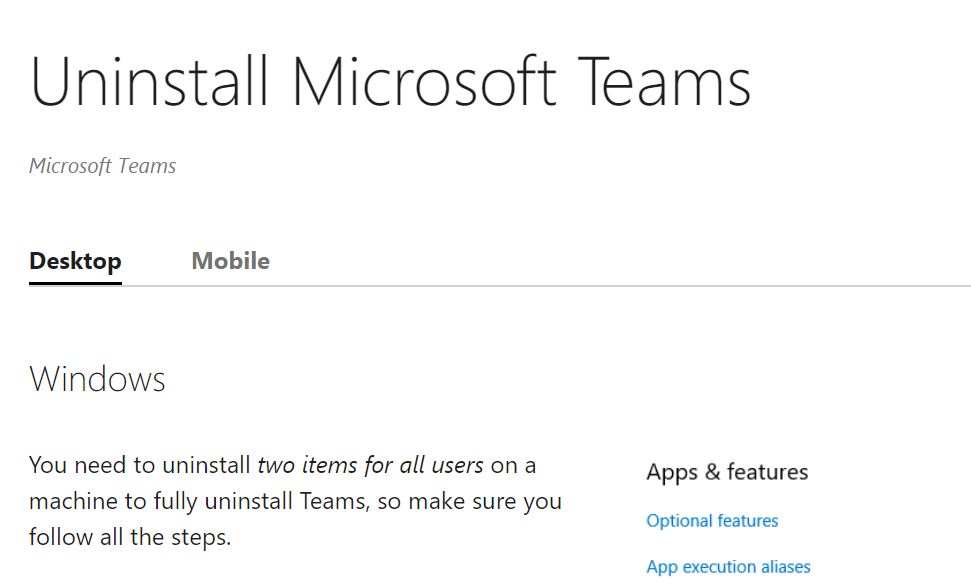
“force installing it for millions, blocking its removal, and hiding the true cost to enterprise customers“
Slack’s VP of Communications and Policy, Jonathan Prince, says they’re “confident” that they beat Microsoft when it comes to the merits of their product but that they:
“can’t ignore illegal behavior that deprives customers of access to the tools and solutions they want“
Their statement about the complaint makes it clear they see this as a proxy for a larger battle, referring to it as “gateways versus gatekeepers“. It feels a bit like they’re playing on the old trope of “EVIL MICROSOFT” here – implying that Microsoft are not open or innovative and treat their customers unfairly, and in fact saying that “Microsoft is reverting to past behavior“. Let’s take a look if that’s true…
A look at the claims
Slack describe Teams as a “weak, copycat product” but is that correct? One could argue that Microsoft’s history of products such as:
Office Communication Server
Lync
Skype for Business
predates Slack by several years and that Teams is a natural progression from those.
ZDNet’s Ed Bott has a great article here that provides some great extra info on Microsoft’s previous antitrust cases, and shows I’m not the only person who thinks this is much ado about nothing too 😄
Welcome, Microsoft
It’s fair to say that Microsoft Teams has improved massively in the years since it’s launch, particularly in the last 6 months or so – with many additions driven by increased usage due to COVID-19 remote working. The improvements – and the fact that so many of these new users have gone to Microsoft rather than to them – have clearly worried Slack, as their tune has changed significantly since they ran a pretty confident advert in the New York Times almost 4 years ago which said:
“You’re not going to create something people really love by making a big list of Slack’s features and simply checking those boxes.“
“We know that playing nice with others isn’t exactly your MO “
“If you want customers to switch to your product, you’re going to have to match our commitment to their success and take the same amount of delight in their happiness“
They finished their letter to Microsoft by saying:
“So welcome, Microsoft, to the revolution. We’re glad you’re going to be helping us define this new product category. We admire many of your achievements and know you’ll be a worthy competitor. We’re sure you’re going to come up with a couple of new ideas on your own too. And we’ll be right there, ready“
It looks now that they’re not quite as happy to have Microsoft around! Ever since the early days, Microsoft have been very good at coming to a product area behind other organisations but, eventually, becoming the #1 in that area – Windows, Office, and Active Directory are all examples of this and they certainly seem to be on their way to doing the same in this collaboration space…hence Slack’s apparent worries!
As well as the above, many of Slack’s other claims can be taken with, at least, a pinch of salt – the 75 million daily users show that Microsoft are giving customers what they need/want and there’s a dizzying amount of third-party software and tools that you can add into Teams.
All in all, I don’t think there’s much to this but it will be interesting to see how seriously the EU take this complaint and what, if anything, comes of it.
It’s just a few weeks into their new financial year and Microsoft are already making changes.
Perpetual software via CSP
Continuing their focus on the CSP (Cloud Solution Provider) program becoming the primary licensing model for the majority of organisations, Microsoft are now making perpetual software aka ‘software licenses’ available via CSP – although Software Assurance (SA) will not be available. This includes products such as:
Office Standard/Professional 2019
Exchange Server 2019
SharePoint Server 2019
The software must be run on hardware dedicated to the customer and downgrade rights are included.
Aimed primarily at those customers who purchase via Microsoft Open licensing, this new offering is intended to reduce the need for organisations to have CSP and another license agreement. From July 1, 2020, a select set of “indirect providers and their indirect resellers” will be able to transact these new additions and then it will open up to all CSP partners from January 2021.
E5 gets calling minutes
UPDATE AUGUST 1,2020: Microsoft have announced they’re cancelling the introduction of both the Enterprise Voice SKUs AND adding Calling Plans to E5.
Shoutout to Rob Quickenden for highlighting this change in Twitter.
Microsoft say in their updated post that they’re no longer launching ” due to rapidly evolving market conditions” and that they will “continue to assess the market and sales data to determine whether the launch will be rescheduled”.
This seems like a strange move. The additions made a lot of sense and have been well received by most people that have already heard about it! I wonder what Microsoft’s logic is?
August 1, 2020 will see the introduction of “Microsoft 365 Enterprise Voice” – a combination of:
Phone System
Audio Conferencing
Domestic Calling Plans
Which will be available in ‘Plan 1’ and ‘Plan 2’ flavours – ‘Plan 1’ will include 120 minutes of domestic outbound calling while the number of minutes in ‘Plan 2’ is still to be revealed.
These will be available via Enterprise Agreement (EA & EAS), CSP, and Web Direct for all countries where Calling Plans are currently available – except for the United States and Puerto Rico. License pre-requisites are M365 F3/E3 or O365 F3/E1/E3.
Additionally, 120 minutes of domestic outbound calling will be added to:
Microsoft 365 E5/A5
Office 365 E5/A5
At no additional cost – although it will require a new SKU.







 Cloudy with a chance of Licensing