Microsoft Teams Rooms licensing: September 2022


Photo by Ron Lach on Pexels.com

The September Product Terms revealed that Microsoft have replaced Teams Rooms Standard & Premium with Teams Rooms Basic & Pro, and we now have more information on feature differences and licensing.

Teams Rooms Basic

This is the free entry level license, included with certified Teams Devices and available via the Microsoft 365 Amin Center (not via resellers etc.). It is limited to 25 licensed devices within an organisation, if devices are needed they must be covered with Pro licenses. Furthermore, it is limited to 1 device per room with the same resource account – if 2 or more devices are needed, this again requires a Pro license.

You’ll notice below that Basic does not include a Teams Phone license, preventing the room from making/receiving PSTN calls.

Teams Rooms Pro

These are $40 per device per month and offer a much wider range of features than the Basic license.

It seems Microsoft have removed access to in-person engineers as part of the management features offered, with the Docs page stating “Microsoft Service engineers will no longer serve as intermediaries to incident response starting October 1, 2022“.

How do they compare to their predecessors?

Teams Rooms Basic is missing many of the features that were present in Teams Room Standard which means organisations may find themselves having to move from the $15 per month Standard license to the $40 per month Pro license at renewal – a significant increase. Equally, although probably much less likely, some organisations could drop from Standard ($15) to Basic ($0) and save money each month.

Basic v Pro

https://docs.microsoft.com/en-gb/microsoftteams/rooms/rooms-licensing#switching-from-teams-rooms-standard-and-teams-rooms-premium

This link here gives a detailed comparison of the differences between Basic & Pro in various different use areas. I would recommend also comparing the new functionality to your existing licenses to identify if you’ll need the Pro option going forwards.


Further Reading

Microsoft announcement

Teams Rooms licensing

New Teams Rooms pricing

Old Teams Rooms pricing

Tom Talks blog for more in-depth telephony info

Microsoft cloud licensing changes coming October 2022


Photo by Aleksandar Pasaric on Pexels.com

Back in May 2022, Microsoft announced a range of upcoming changes to licensing in cloud environments and now, September 2022, we have more details.

Flexible Virtualization

This new benefit will allow customers with Software Assurance or subscription licenses to use their existing licenses to install and run on any (but not Listed Provider) infrastructure – whether it’s dedicated or shared.

Windows Server virtual cores

Customers will be able to license Windows Server by virtual core on 3rd party infrastructure. There will, of course (!), be a per VM minimum. The Microsoft announcements don’t mention Listed Providers for this element so perhaps this new licensing option will be available with Amazon, Google, and Alibaba…although it seems unlikely!

Desktop virtualization

Microsoft 365 E3/E5/F3 users without a primary device with a Qualifying Operating System (QoS) will be able to virtualize Windows 10/11 on 3rd-party infrastructure (but not Listed Providers) without needing the VDA add-on.

Cloud Solution Provider – Hoster

This new variant of the CSP program replaces the QMTH (Qualified Multi-Tenant Hosting) program. It will enable hosting partners to pre-build hosted desktop & server environments for customers and either provide the licenses or use customer provided licenses – giving greater flexibility for organizations. Customers will need to show proof-of-license for BYOL scenarios – verification of which I assume will be done by the partner. Initially it will only be available for Direct partners but Microsoft “look forward to expanding program eligibility over time“.

Microsoft state these will go live from October 1st so we should see them added to the Product Terms on that date too. I’ll of course be updating on that asap 😊

Check out the Microsoft post here.

Microsoft Product Terms: July 2022


Photo by Markus Winkler on Pexels.com

After a bit of a wait for Redmond to publish, the latest update is here. Not surprisingly, given the time of year, there’s nothing major – mainly just a bit of tidying up this month:

Added/updated terms for:

Windows AutoPatch
MCA cancellations
Azure Limited Access Services

Removed old references for:

Business Voice
GitHub Learning Lab for Organizations
Office 365 Add-ons

Change to show 3.5K AI Builder Credits are included per SharePoint Syntex license

Academic plans added to Cloud for Non-profit qualifying licenses

Microsoft Viva Sales – another new member


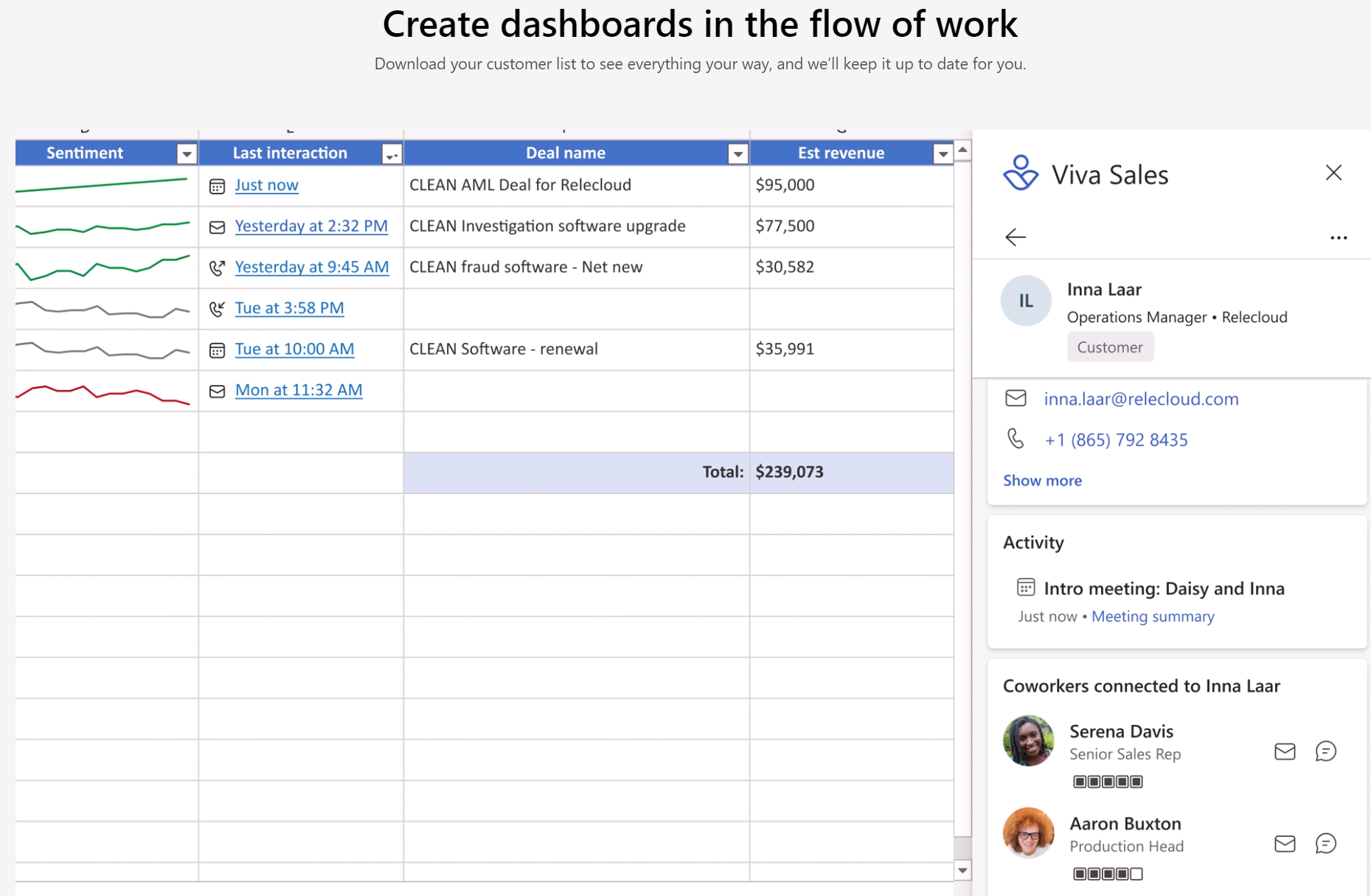
Hot on the heels of Viva Goals, Microsoft have introduced Viva Sales. This latest family member is a “new seller experience” that brings Microsoft 365 & Teams together with “any” CRM system to streamline processes for salespeople…it also adds a hint of AI into the mix.

Areas it helps with include:

  • AI organised data and tasks
  • Inbuilt sentiment analysis
  • Surfacing unstructured data from Office documents
  • Automated data capture
  • Reminders

and more, with Microsoft describing it as a sales coach that helps move deals along. It will also surface “business context” data within Outlook and Teams and allow salespeople to update their CRM from those platforms too.

Much of this is, as with many other products, about keeping people within Teams as much as possible – making it the “collaboration hub” for users across organisations.

A feature called Sales Conversation Intelligence (SCI) will help sellers byl:

  • Generating meeting summaries
  • Tracking customer sentiment
  • Suggesting action items

all to keep deals on track and moving along.

Licensing and pricing

Viva Sales is free for users already licensed with Dynamics 365 Enterprise and Premium – for everyone else it will be $40 per user per month. It hits General Availability on October 3rd, 2022 and is NOT part of the Viva Suite.

I like the sound of what Viva Sales can do and am keen to check it out further – as anything that makes sales and customer management easier is a good thing. No matter the CRM you use, it’s never as intuitive and easy to use as users would like…perhaps Viva Sales will go some way to alleviating that. Or perhaps it will just be one more thing to add to the mix?!

Further Reading

Microsoft Announcement

Microsoft Viva Sales page

More info on features and pricing

Microsoft Product Terms June 2022


Photo by Markus Winkler on Pexels.com

Some new M365 F5 Security bundles made available – further expanding what’s possible for protecting frontline workers.

Microsoft Sustainability Manager added. This is what we’ve been calling Microsoft Cloud for Sustainability…it seems that will be now an umbrella term and Sustainability Manager will come under that.

Clarification that the SQL Server Enterprise SA benefit of running Power BI Server applies in a fail over OSE too

Tidying up of various clauses and terms.

No mention of the major changes they announced for cloud BYOL rules around Windows Server, Windows desktop, and Office.

Microsoft Product Terms: May 2022


Photo by Markus Winkler on Pexels.com

It’s almost the end of Microsoft’s financial year and typically things quieten down, but there is one interesting change this month:

SQL Server Standard can now use Distributed Availability Groups (AG*), a feature which has been an Enterprise only feature up until now. However, it is limited by the fact that the DAG may only synchronise with Azure.

The Microsoft Docs page (like this one https://docs.microsoft.com/en-us/sql/database-engine/availability-groups/windows/distributed-availability-groups?view=sql-server-ver15#version-and-edition-requirements) haven’t yet been updated…

*Microsoft say that “DAG” is used for Exchange’s Database Availability Group feature and this SQL feature is to be shortened to “AG” instead.

The couple of other Product Terms changes are:

  • Microsoft 365 Business Premium added as a base license for the Remote Help SKU
  • Terms added to detail the guidance around CSP renewals, cancellations, and co-terms

Microsoft Financial Results: Q3 FY22


Photo by John Guccione http://www.advergroup.com on Pexels.com

Microsoft’s financial results for Q3 FY22 (Jan – Mar 22) are in and, once again, they’re showing strong growth in all their key focus areas. They also listed several big name customers that they’re working with including:

  • Bridgestone
  • Lufthansa
  • Fujitsu
  • Woolworths
  • Cracker Barrel
  • Heineken

and called out Boeing, Heinz, and Westpac among customers making “strategic” Azure commitments.

Satya Nadella always hits us with a good quote during the earnings call and this quarter’s was:

“The last two years have proven that every organization needs a digital fabric that connects the entire organization”

Let’s take a look at some of the numbers:

Overall

Revenue = $49.4 billion – up 18%

Operating income = $20.4 billion – up 19%

Really strong top line numbers as always – remember, this is for just 3 months!

Productivity & Business Processes

Revenue = $15.8 billion – up 17%

  • Office 365 Commercial up 17%
  • Dynamics 365 up 35%
  • LinkedIn up 35%

Microsoft saw growth in SMB and frontline SKUs as well as increase in Revenue Per User – a key SaaS metric.

Office on-prem revenue was down 28%, continuing the downwards trend that we’ve been seeing for a couple of years now. It was noted as well that the end of Open Licensing has caused a drop in transactional license sales during the last quarter.

Intelligent Cloud

Revenue = $19.1 billion – up 26%

  • Azure (and other cloud services) up 46%
  • Server products up 5%

Another strong showing from Azure…with the number of $100 million Azure deals more than doubling over the previous year.

The server products increase includes Window Server & SQL Server in hybrid use cases (as well as Nuance) and again Microsoft mentioned the impact of Open Licensing’s end.

What else did we learn?

  • Satya Nadella once again called out the performance of Cosmos DB, with 100%+ YoY growth for 3 quarters in a row.
  • Power Platform, as a family, was up 72% year on year.
  • Microsoft Viva has over 10 million monthly active users.

Overall this is another great performance from Microsoft, giving them good momentum as they move into their Q4 (April – June) which is always a busy time of year. It will be interesting to see the full FY results in July for sure!

Microsoft Purview


Photo by Pixabay on Pexels.com

Microsoft have once again combined and rebranded some of their products – Azure Purview + the Microsoft 365 compliance products = Microsoft Purview. This new product family combines 17 different products across data governance and risk management – the (relatively straightforward) name changes are:

Current NameNew Name
Microsoft 365 Advanced AuditMicrosoft Purview Audit (Premium)
Microsoft 365 Communication ComplianceMicrosoft Purview Communication Compliance
Microsoft Compliance ManagerMicrosoft Purview Compliance Manager
Office 365 Customer LockboxMicrosoft Purview Customer Lockbox
Azure Purview Data CatalogMicrosoft Purview Data Catalog
Microsoft 365 Data ConnectorsMicrosoft Purview Data Connectors
Microsoft Information GovernanceMicrosoft Purview Data Lifecycle Management
Office 365 Data Loss PreventionMicrosoft Purview Data Loss Prevention
Azure Purview Data MapMicrosoft Purview Data Map
Double Key Encryption for Microsoft 365Microsoft Purview Double Key Encryption
Records Management in Microsoft 365Microsoft Purview Records Management
Office 365 Advanced eDiscoveryMicrosoft Purview eDiscovery (Premium)
Microsoft 365 Information BarriersMicrosoft Purview Information Barriers
Microsoft Information ProtectionMicrosoft Purview Information Protection
Microsoft 365 Insider Risk ManagementMicrosoft Purview Insider Risk Management
Azure Purview portalMicrosoft Purview governance portal
Microsoft 365 compliance centerMicrosoft Purview compliance portal

The new offering now includes data protection for the macOS platform as well as 50+ new sensitive info classifiers, co-authoring of encrypted documents on mobile devices (in preview), and multi-stage retention labels. It’s another step along the way in Microsoft’s journey to make their security portfolio stronger, less fragmented and – perhaps – less confusing.

If you have (what was) Azure Purview – head over to the Microsoft Purview governance portal here.

If you have Microsoft 365 E5 and/or Microsoft 365 E5 Compliance – head over to the Microsoft Purview Compliance portal here.

You can see some of the Purview pricing here.

Microsoft non-profit price increases – 2022


Photo by Karolina Grabowska on Pexels.com

Microsoft have announced a set of price increases for the non-profit sector from September 1, 2022. The pricing is as follows:

ProductCurrent priceNew price (Sept 22)
Office 365 E1$2.00$2.50
Office 365 E3$4.50$5.75
Office 365 E5$14.00$15.20
Microsoft 365 E3$8.00$9.00
Microsoft 365 Business Premium$5.00$5.50

Microsoft call out that these price increases can be used to drive adoption of Microsoft 365 E5 – which, just as with the commercial SKUs, doesn’t have a price increase planned.

Other changes

April 2022 also saw the end of Microsoft’s free grants for on-premises software – although non-profits in areas where Azure isn’t available can still get grants for Windows Server & SQL Server.

Microsoft are now making grants of 50 Windows Pro licenses available to non-profits, with additional discounted licenses being available

Resources

Microsoft page re: price increase

Microsoft page re: other changes

Microsoft Product Terms – March 2022


Photo by Markus Winkler on Pexels.com

Again, not a huge amount of change in the Microsoft Product Terms for March 2022:

Microsoft 365 Privacy Management has been rebranded “Priva”…I thought they might change their mind on this one 😂 I guess they wanted to make sure there was something people could confuse with Viva?!

Expanded pre-requisite licenses for Cloud for Healthcare add-on

Azure Virtual Desktop per user access promo extended to March 31st, 2022 (although the section doesn’t appear to have actually been updated)

SQL Server Big Data Nodes have been retired – anything other than the “core” SQL editions just never seems to quite work does it?

Updated “no cancellations after 72 hours” terms for online services under CSP NCE