Microsoft Product Terms: August 2020


Photo by Markus Winkler on Pexels.com

Nothing too major this month, as expected:

  • The Teams Advanced Communications SKU has been added
  • There are a few updates to SQL Hybrid Benefit info for Server Subscriptions
  • Added extra Power Platforms info covering:
    • Purchase minimums
    • Extended Use Rights for Portals
    • Additional pre-requisites

Nothing new for Power Platform, really just moving key info from the licensing guide to the Product Terms – which is the way it should be.

Microsoft FY20 Financial Results


Photo by Padli Pradana on Pexels.com

Microsoft had, as expected, a great Q4 with revenue up 13% to $38 billion, which closed out an equally good fiscal year. Overall revenue of $143 billion, and operating income of $44.3 billion, was driven by revenue increases in all Microsoft’s key areas:

  • Office 365 was up 19%
  • Dynamics 365 was up 38%
  • LinkedIn increased by 10%
  • Azure was up 47%

Although the Azure growth was lower than previous quarters, it still seems healthy enough for now.

Microsoft called out some interesting points during their earnings call, some of which give a good indication of future direction including:

Slowdown in transactional licensing and flat on-premises server revenue: While this may be down, at least in part, to the impact of COVID-19 – it is also where Microsoft are heading. This is also shown by the fact that Office Commercial (on-premises Office) was down 34% -which Microsoft attributed to a combination of COVID-19 and the move to annuity licensing.

As long as those transactional licenses and on-premises server software are being replaced by CSP, Microsoft 365, and Azure – Redmond will be happy. I’ll be keen to see if this numbers start to rise again as the economic situation stabilises.

Bigger, longer Azure contracts: They stated “material growth” in Azure contracts over $10 million which is good news for Microsoft. For everyone in this new subscription based world, locking customers in to longer term deals is a key aim as it makes it easier for the vendor to forecast and budget.

Increased ARPU for Office 365: Average Revenue Per User (ARPU) is a key metric for many of today’s organisations and an increase means Microsoft are making more money per user. This could be as they upgrade to higher level plans (E3 to E5 for example) or purchase add-ons to their existing licenses. The Office 365 seat count increased and the ARPU increased, which are both positive for Microsoft.

All in all, a very positive performance from Microsoft that clearly shows their focus on cloud continues to pay off. Looking ahead to this financial year, FY 21, I think we’ll see more focus on E5 – particularly for security and voice workloads, Power Platform continuing to appear in new places, and increased pressure on those organisations looking to remain on-premises.

See the Microsoft press release and figures here.

Microsoft Teams Advanced Communications SKU


Photo by Andrea Piacquadio on Pexels.com

Announced during Microsoft Inspire, August 1, 2020 will see a new add-on SKU for Microsoft Teams – “Advanced Communications”. Sitting as an add-on to any SKU that includes Teams it will give a range of features including:

  • Larger meetings
  • Customized lobbies
  • Compliance recording

although it seems not all features will be available immediately. It’s an interesting move…it seems quite a narrow set of features to put into a chargeable SKU – especially at $12 per user per month – so I’m keen to see how well this takes off. Perhaps it will be one of Microsoft’s semi-regular u-turns where they decide not to charge in the end?

Props to Matt Landis who spotted this first – he has more info on his blog too.

Slack make antitrust complaint about Microsoft Teams


Photo by RODNAE Productions on Pexels.com

In a move that’s got some strong late 90s/early 2000s vibes, Microsoft are the subject of a new EU antitrust complaint. Slack have accused Microsoft of:

illegally [tying] its Teams product into its market-dominant Office productivity suite

and go on to say that they are:

“force installing it for millions, blocking its removal, and hiding the true cost to enterprise customers

Slack’s VP of Communications and Policy, Jonathan Prince, says they’re “confident” that they beat Microsoft when it comes to the merits of their product but that they:

can’t ignore illegal behavior that deprives customers of access to the tools and solutions they want

Their statement about the complaint makes it clear they see this as a proxy for a larger battle, referring to it as “gateways versus gatekeepers“. It feels a bit like they’re playing on the old trope of “EVIL MICROSOFT” here – implying that Microsoft are not open or innovative and treat their customers unfairly, and in fact saying that “Microsoft is reverting to past behavior“. Let’s take a look if that’s true…

A look at the claims

  1. Slack describe Teams as a “weak, copycat product” but is that correct? One could argue that Microsoft’s history of products such as:
  • Office Communication Server
  • Lync
  • Skype for Business

predates Slack by several years and that Teams is a natural progression from those.

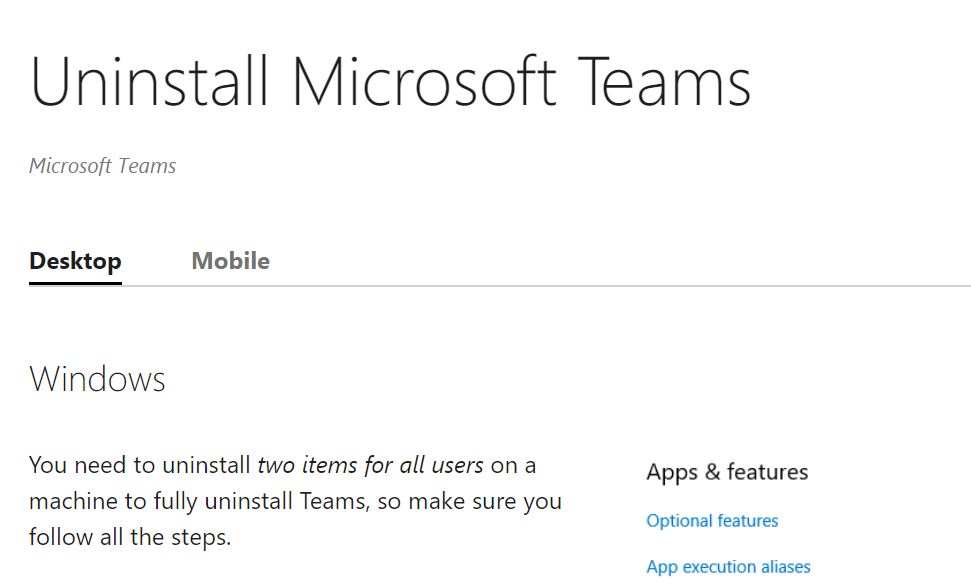
2. This is a weird way of “blocking its removal” – https://support.microsoft.com/en-us/office/uninstall-microsoft-teams-3b159754-3c26-4952-abe7-57d27f5f4c81

ZDNet’s Ed Bott has a great article here that provides some great extra info on Microsoft’s previous antitrust cases, and shows I’m not the only person who thinks this is much ado about nothing too 😄

Welcome, Microsoft

It’s fair to say that Microsoft Teams has improved massively in the years since it’s launch, particularly in the last 6 months or so – with many additions driven by increased usage due to COVID-19 remote working. The improvements – and the fact that so many of these new users have gone to Microsoft rather than to them – have clearly worried Slack, as their tune has changed significantly since they ran a pretty confident advert in the New York Times almost 4 years ago which said:

You’re not going to create something people really love by making a big list of Slack’s features and simply checking those boxes.

We know that playing nice with others isn’t exactly your MO “

If you want customers to switch to your product, you’re going to have to match our commitment to their success and take the same amount of delight in their happiness

They finished their letter to Microsoft by saying:

So welcome, Microsoft, to the revolution. We’re glad you’re going to be helping us define this new product category. We admire many of your achievements and know you’ll be a worthy competitor. We’re sure you’re going to come up with a couple of new ideas on your own too. And we’ll be right there, ready

It looks now that they’re not quite as happy to have Microsoft around! Ever since the early days, Microsoft have been very good at coming to a product area behind other organisations but, eventually, becoming the #1 in that area – Windows, Office, and Active Directory are all examples of this and they certainly seem to be on their way to doing the same in this collaboration space…hence Slack’s apparent worries!

As well as the above, many of Slack’s other claims can be taken with, at least, a pinch of salt – the 75 million daily users show that Microsoft are giving customers what they need/want and there’s a dizzying amount of third-party software and tools that you can add into Teams.

All in all, I don’t think there’s much to this but it will be interesting to see how seriously the EU take this complaint and what, if anything, comes of it.

Further Reading

Slack statement

Slack advert

Microsoft July 2020 licensing changes


Photo by Alexas Fotos on Pexels.com

It’s just a few weeks into their new financial year and Microsoft are already making changes.

Perpetual software via CSP

Continuing their focus on the CSP (Cloud Solution Provider) program becoming the primary licensing model for the majority of organisations, Microsoft are now making perpetual software aka ‘software licenses’ available via CSP – although Software Assurance (SA) will not be available. This includes products such as:

  • Office Standard/Professional 2019
  • Exchange Server 2019
  • SharePoint Server 2019

The software must be run on hardware dedicated to the customer and downgrade rights are included.

Aimed primarily at those customers who purchase via Microsoft Open licensing, this new offering is intended to reduce the need for organisations to have CSP and another license agreement. From July 1, 2020, a select set of “indirect providers and their indirect resellers” will be able to transact these new additions and then it will open up to all CSP partners from January 2021.

E5 gets calling minutes

UPDATE AUGUST 1,2020: Microsoft have announced they’re cancelling the introduction of both the Enterprise Voice SKUs AND adding Calling Plans to E5.

Shoutout to Rob Quickenden for highlighting this change in Twitter.

Microsoft say in their updated post that they’re no longer launching ” due to rapidly evolving market conditions” and that they will “continue to assess the market and sales data to determine whether the launch will be rescheduled”.

This seems like a strange move. The additions made a lot of sense and have been well received by most people that have already heard about it! I wonder what Microsoft’s logic is?

See more here: https://docs.microsoft.com/en-us/partner-center/announcements/2020-july#10

August 1, 2020 will see the introduction of “Microsoft 365 Enterprise Voice” – a combination of:

  • Phone System
  • Audio Conferencing
  • Domestic Calling Plans

Which will be available in ‘Plan 1’ and ‘Plan 2’ flavours – ‘Plan 1’ will include 120 minutes of domestic outbound calling while the number of minutes in ‘Plan 2’ is still to be revealed.

These will be available via Enterprise Agreement (EA & EAS), CSP, and Web Direct for all countries where Calling Plans are currently available – except for the United States and Puerto Rico. License pre-requisites are M365 F3/E3 or O365 F3/E1/E3.

Additionally, 120 minutes of domestic outbound calling will be added to:

  • Microsoft 365 E5/A5
  • Office 365 E5/A5

At no additional cost – although it will require a new SKU.

Further Reading

https://docs.microsoft.com/en-us/partner-center/announcements/2020-july

First CWACOL podcast episode now live!


I first mentioned launching this podcast at the tail end of 2019 but various factors, including the whole global pandemic, put me behind schedule. However – wait no longer – the first episode of the ‘Cloudy with a chance of Licensing’ podcast is here, whoop whoop!

I sat down with Deidré Jones of Zebra Perspectives to talk about what’s involved in being a Microsoft partner and how to get the most out of the relationship – for both parties. I’ve known Diedré for quite a while, from my own years as a Microsoft channel partner, and it was great to catch up and talk through some of the elements you need to consider and work at when building the relationship.

I must point out that we recorded this pre-COVID-19 so it was before all the conferences, including Microsoft Inspire, went digital! That said, it all still makes a lot of sense 😁

I’m raring to get more of these recorded and published now! I’ll be getting in touch with those of you who expressed an interest originally (thank you!) but please feel free to drop me a line and let’s get something moving 😀 🎙

Microsoft Product Terms: July 2020


Photo by Markus Winkler on Pexels.com

There was no English document available on the 1st when I did this (I guess the end of FY took it out of them 🤣), so I used the French version…my now 909 day Duolingo streak is coming in handy!

Nothing major changed or announced which is to be expected; being the start of their new financial year (and when everyone goes on holiday), July & August are often pretty quiet. What we’ve got is:

“System Center Configuration Manager” is renamed to “Microsoft Endpoint Configuration Manager”. The first real sign of anything happening with this new product name since it was announced a few months back.

“Azure Monetary Commitment” is now “Azure prepayment”.

If you have 1 or more licenses of Project Plan 1/3/5, all O365 users on that tenant get limited access to “Project for the web” customer data. No access to Power Platform apps and doesn’t apply to public sector.

Microsoft stores are (almost) no more


Photo by Pixabay on Pexels.com

Microsoft have announced they’re shutting all their stores worldwide, although they’re retaining the following four as “experience centres”:

  • New York City
  • London
  • Sydney
  • Redmond (Microsoft Campus)

Microsoft stores always seemed like an attempt to keep up with Apple – they looked pretty similar and, in many cases, they were physically located very close to Apple stores – and I’m not sure how integral they’ve really been in terms of sales etc. I’ve only been to a couple – one out in Virginia and the other (I think) in LA and, to be fair, they were pretty cool. That said, I think the biggest benefit of stores is to check out the hardware – click the buttons, pick it up, feel the screen etc. and between places like Currys PC World and the “stores” Microsoft have within John Lewis, I think most places in the UK have the ability.

I also think a big part of the stores was to raise consumer awareness of Microsoft. It was certainly the case that their general level of recognition had dipped with many non-tech consumers and also their reputation wasn’t always the greatest. The stores gave them an opportunity to be seen by people who weren’t already looking for them, for the casual mall browser to “pop in” and take a look around, for the Xbox buyer to also see what else Microsoft had to offer. Now, several years later, it’s clear to most that Microsoft’s position is much improved. The Surface range is well known and Teams has given them broad appeal across many types of staff – and the public sector too.

Some are saying that Microsoft are “giving up on consumers” but I think it’s more a case of going where the consumers are. Online shopping was already the “go-to” for many in 2019 but COVID-19 has increased that significantly and, while some will rush back to the crowded shopping centres and malls, many will not. For a lot of people, they’ve realised that buying things online works very well and, making sure you choose places with a sound returns policy, even changing your mind isn’t much of a problem really.

Microsoft will take $450 million hit on this but that’s not really a huge amount for them. As long as they have a clear strategy for how they will continue to engage with users online, I don’t see there being much downside to this really.

Microsoft Product Terms: June 2020


Photo by Markus Winkler on Pexels.com

June is the last month of Microsoft’s financial year but they’re still made a few changes worth noting in this month’s Product Terms:

  • 5 year reservations for Azure VMs are added – with a 35% early termination fee
  • Azure Hybrid Rights for SQL have been expanded so now:
    • on-premises SQL Server Standard licenses can be used to run SQL Server Enterprise VMs in Azure
    • on-premises SQL Server Enterprise licenses can be used to run SQL Server Standard VMs in Azure
  • Changes to the eligibility for Office 365 and Microsoft 365 F1 & F3 licenses

SQL Server

The core conversion ratio is different for the two new scenarios:

4 x SQL Server Std on-prem cores w/SA = 1 x SQL Server Ent Azure core

1 x SQL Server Ent on-prem core w/SA = 4 x SQL Server Std Azure core

You can see the above table, and the info, on pages 54-54 of the June 2020 Product Terms.

F1/F3 changes

Microsoft have again changed the rules around who is eligible for a “Firstline” SKU. The new requirements are that to qualify for an F1/F3 license a worker must satisfy at least one of these conditions:

  • Uses a primary work device with a single screen smaller than 10.1”
  • Shares their primary work device with other qualifying Microsoft 365 or Office 365 Firstline Worker licensed users, during or across shifts
    • Other licensed Microsoft Firstline Worker users must also use the device as their primary work device
    • Any software or services accessed from the shared device requires the device or users to be assigned a license that includes use of those software or services

The previous guidance, updated in November 2019, was:

“A Dedicated Device is a computing device used for work with a 10.1” screen or larger, used by the user more than 60% of the user’s total work time during any 90-day period.”

These new rules should make it a bit easier for everyone to police but, for organisations already licensed for F1/F3 prior to June 1, 2020, you can continue to license based on the previous rules until your next renewal.

Microsoft Cloud for Healthcare


Photo by Edward Jenner on Pexels.com

Microsoft have introduced their first vertical specific cloud offering – Cloud for Healthcare. Currently in public preview, the stated aims of this are to:

  • Enhance patient engagement
  • Empower health team collaboration
  • Improve insights

and, considering the current Coronavirus situation, focusing first on healthcare makes sense. They highlight that over 1,600 “COVID-19 bots” have gone live since March across 23 countries and we’ve already seen a huge rise in Azure usage during the last couple of months. The offering will span Azure, Microsoft 365, Dynamics 365 and more.

What’s next?

I look forward to seeing which other verticals are next to receive their own cloud and also, over the long term, if we start to see features and licensing differences between them. As cloud goes from being presented as one monolithic thing that everyone uses to separate, discrete offerings tailored to different industries, it will be much easier to introduce commercial differences. I imagine we’ll see some more about these at Microsoft Inspire in July.