Despite us all believing that Windows 10 was the last version of Windows…here we are with Windows 11 announced and fast approaching.
What do we know?
Microsoft have said “holiday season 2021” so I’d imagine it will be available in time for Black Friday with things really ramping up for Xmas.
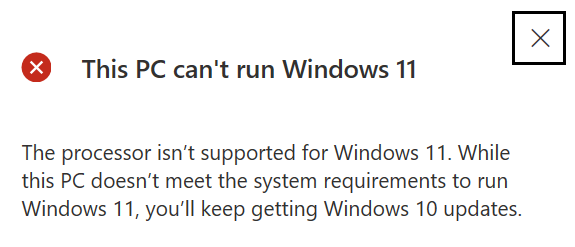
Not all devices running Windows 10 will be able to run the new OS:
You can download the Health Check app here to find out. There is a requirement for TPM (Trusted Platform Module) chips and, according to TechRadar, many devices that have one may have them disabled by default – which means the Health Check app fails machines which, ultimately, will be able to run Windows 11. Before you go an buy a new machine, take a look and see if you’ve got a TPM chip to enable!
One has to wonder what this might mean for businesses – is Windows 11 going to require a big wave of hardware refreshes? If so, I can see Windows 10 becoming the new Windows XP!
What’s new?
Some of the key changes include:
Keyboard optimised for touch and tablet use
Snap layouts – let you arrange multiple windows in various configurations, you can see some of the options here:
You will also be able to create multiple fully separated desktops.
“Chat from Teams” integrated into the taskbar and the ability to use 2-way SMS messaging.
Revamped Microsoft Store which will include Android apps via a partnership with Intel and Amazon.
Annual updates rather than the current 2 per year.
The Taskbar will be centered and, it seems, will have to be positioned at the bottom of the screen. I’ve had mine at the top for years (it’s the best place to have it!) and can imagine this being enough to keep me on 10 for a while! 🤣
There was a pretty big change this month as Microsoft removed a key requirement for “From SA” licenses. These allow organisations that have on-premises licenses with Software Assurance (SA) to migrate to Microsoft 365 at a reduced price – taking into account the investment in SA.
Back in early 2020, Microsoft added a clause that customers had to retain their existing on-premises licenses throughout the “From SA” subscription period. This presented a barrier for organisations in Europe looking to engage in the 2nd-hand software market and re-sell their (now unwanted) on-premises licenses.
However, in June 2021 Microsoft said:
For customers who choose to purchase “From SA” licenses, we removed the requirement that customer retain the corresponding Qualifying Licenses throughout its From SA license subscription period
It’s a very interesting move from Microsoft and I am keen to see what related announcements we might see at their Inspire conference in July.
Further changes include:
Windows 10 Enterprise/E3 has been removed as a pre-requisite for the M365 F5 add-on SKUs.
Remote Work Starter Plan added to CSP <– This seems to have launched in Japan in August 2020 and looks to be basically a “Teams+OneDrive” SKU
Customers with Microsoft Project Plan 1/3/5 are only permitted to use Universal Resource Scheduling to schedule Project and Task tables within the context of a project
Here are the Microsoft Product Terms changes for May 2021:
M365 Business Basic/Standard/Premium added as pre-requisite licenses for Audio Conferencing and Phone System
Microsoft 365 Career Coach USL has been added for Academic customers
Microsoft 365 Scheduler has been added. This includes a “human-assisted AI Service” for complex scheduling requests.
Microsoft Teams: Terms added to confirm licenses are not required to join meetings/live events hosted by licensed users. Also that external users don’t need a license for Guest access via AAD External Identity.
Power Platform: All Power Platform licenses now have “extended term eligibility” under EA/EAS/SCE
A relaxing of the terms around Project for the web and how the data can be viewed.
Another cloud management tool has been acquired by a large software vendor – this time it’s IBM snapping up Turbonomic.
If you’re not familiar with them, Turbonomic use AI to optimize and manage cloud resources, including reducing cloud costs, across VMs, Databases, Containers, Storage and more. This is further progress in IBM’s quest to become a cloud & company…according to them they are now the only vendor who can
“provide customers with AI-powered automation capabilities that span from AIOps to application and infrastructure observability”
So many cloud companies have been purchase over the last couple of years and Turbonomic have been at the forefront for a while. I remember thinking a few years ago that Microsoft would buy them so I’m not surprised they’ve been acquired at all – and it seems a logical step for IBM. I wonder if the technology will get lost within IBM’s enormous array of products and SKUs?
Microsoft’s financial results for Q3 FY21 (Jan – Mar 21) are in and, as usual, they’re pretty impressive.
Revenue = $41.7 billion – up 19%
Operating income = $17 billion – up 31%
Looking at the different product divisions we can see:
Productivity & Business Processes
Revenue = $13.6 billion – up 15%
Office 365 Commercial was up 22%, LinkedIn increased 25%, and Dynamics 365 was up 45%.
Microsoft Teams is up to 145 million daily active users, almost doubling YoY and Office 365 Commercial has nearly 300 million paid seats. Office Commercial products (on-premises Office) was down 25% – continuing its downwards trend as organisations continue to move to the cloud.
Satya Nadella revealed that Power Platform now has almost 16 million monthly active users, an increase of 97%, and revenue has increased by 84%. Amy Hood (CFO) called out Power Apps and Dynamics 365 Finance & Operations as strong performers.
Intelligent Cloud
Revenue = $15.1 billion – up 23%
Azure growth was 50% yet again, with Amy Hood highlighting an increase in the number of large, long-term Azure contracts.
On-premises server products grew 3%, although that seems to largely be due to year on year currency fluctuations, and the EMS install base grew again, now sitting at 174 million seats.
SQL Server on Azure VMs grew 129% YoY alongside Cosmos DB growth too.
More Personal Computing
Revenue = $13 billion – up 19%
Again there was a big difference in Windows OEM as Pro revenue declined 2% but non-Pro grew 44%.
Microsoft announced this month ( April 2021) that they’ve acquired Nuance Communications for $19.7 billion – their 2nd biggest acquisition behind LinkedIn.
You may be familiar with Nuance for their Dragon Naturally Speaking speech recognition software and/or Power PDF but the focus for Microsoft is their work in the Healthcare sector – much of which is built on Azure. It follows Microsoft’s announcement of their “Cloud for Healthcare” vertical offering and clearly indicates they see it as a growth market for them; they believe it will bring their Total Addressable Market to $500 billion in the healthcare provider space – even a small piece of that will make that $20 billion seem like small change!
Going forward, Nuance will be included within Microsoft’s “Intelligent Cloud” division and Nuance will retain its CEO, Mark Benjamin, who will report into Scott Guthrie – executive vice president of Cloud & AI at Microsoft.
Updates to the CAL/ML Equivalency tables to make them clearer Updates to Dynamics 365 Purchasing Minimums table Updated Azure Maps API results clause to include Weather
I can’t help but feel like there are some big things coming in a couple of months…
Microsoft are adding a raft of new features to both EMS (Enterprise Mobility & Security) and Intune, these include:
Microsoft Tunnel VPN features for Android and iOS devices
Enhanced MacOS management capabilities
New endpoint analytics features
Various enhancements to Microsoft Endpoint Manager
These, and other, additions mean that Microsoft are putting the prices up. From July 1, 2021:
EMS E3 will increase from $9 pupm to $11
Intune will increase from $6 pupm to $8
However, the price for Microsoft 365 E3 won’t increase (and so one must assume that neither will E5) – making the bundle option that little bit more attractive.
In the recent earnings call for Oracle’s Q3 FY21 results, Oracle Chairman Larry Ellison once again went on the offensive against SAP when it comes to their ERP capabilities.
First, some background…
At the 27th Citi Technology Investors Conference in September 2020, SAP CFO, Luka Mucic, said that SAP hadn’t lost a single ERP customer to Oracle. This was in response to a question based on Larry Ellison’s claims during a previous Oracle earnings call that Oracle were making inroads into SAP’s top 10 customers and were moving into their top 50 accounts too. Mucic said:
We are not aware of any competitive replacement. We actually are aware of quite a few we have competitively replaced other ERP solutions from our traditional competition through S/4HANA recently
He then said:
“I think also the relative growth that we are able to post versus that traditional competitor…actually speaks the clear language…perhaps at some point there will be more transparency given to us [as to] which customer…exactly [the] competition is talking about.”
and finished off by clearly stating:
“I have checked and we have not lost a single customer.”
“In Q3 alone [Oracle] signed contracts, totalling hundreds of millions of dollars to migrate several very large SAP ERP customers, to Oracle Fusion ERP”
And then, clearly in response to Mucic’s request for more transparency as to which customers are involved, he went on to list over 100 customers that have, or are in the process of, switching from SAP to Oracle Fusion ERP! Customers listed included:
TPS Company
G4S
First Solar
CEMEX
New Zealand IRS
University of The Andes
Postcon (2nd largest mail carrier in Germany)
Birmingham City Council (in the UK)
Fedex
Grupo Bimbo
Natwest Group
The largest private company in Belgium
And there were plenty more too.
These are all customers that Ellison claims have replaced all their SAP with Oracle, or they’re in the process of doing so. He had another section of the list for organisations that are purchasing Oracle ERP but still running SAP ERP too and said it is Oracle’s expectation is that “the vast majority” of those organisations will ultimately move entirely across to Oracle ERP.
He finished off by saying:
“SAP, the once-dominant on-premise[s] ERP market leader is currently not competitive in the cloud ERP market. … SAP … never rewrote their ERP system for the cloud and it’s too late for them to start now”
When asked why this SAP to Oracle migration is happening now, Ellison had more to say about SAP’s strategy:
“SAP instead, embedded their own database called HANA and focused on this new database and never really rewrote their ERP code for the cloud. I mean, it’s just an unbelievable error. S/4HANA in the cloud is … not a cloud product at all. It is the 35-year-old … programming language called ABAP”
and finished with:
“SAP really is more responsible for our leadership position than we are”
Conclusion
It’s difficult to know what the facts are here. SAP clearly stated they haven’t lost any customers to Oracle…but Oracle have publicly listed dozens of customers they say they’ve taken. They can’t both be right…but surely neither would have made such false claims? I can only assume there’s a way that they ARE both right…perhaps different definitions of what “losing” a customer is?
These two companies have long been rivals but things really seem to be heating up now. Whether this is because Oracle truly believe they’re the stronger option or this is a case of “the best form of defence is attack” remains to be seen but either way, this escalating ERP battle us sure to have an impact on customers.
If you’re an SAP ERP customer, can you use this to your advantage? Will the mere mention of looking at Oracle ERP prompt SAP to offer discounts and favourable terms in your next negotiation?
Maybe there’s no smoke without fire and Oracle really ARE miles ahead of SAP now (disclaimer – I have no idea!). If so, should you seriously evaluate them before moving to SAP S/4 HANA?
I’m intrigued to see the next steps in this conflict for sure!
Back in May 2020, Microsoft announced Cloud for Healthcare – their first vertical specific cloud offering and it launched in October that year. Microsoft Cloud for Retail was announced in January 2021 and now, following Ignite 2021, they have announced three more:
Microsoft Cloud for Financial Services
Microsoft Cloud for Manufacturing
Microsoft Cloud for Non-profit
Why ?
One of the great benefits of public cloud – the ability to pick and choose from an almost endless array of options and combine them in a seemingly infinite number of combinations – can also be a huge weakness. For some industries, it’s more important to have an “Out of the Box” offering that does what they need and, most importantly these days, be super secure while it’s doing it.
Plugging various different cloud services together is often where security gaps start to appear – a slight misconfiguration here, a forgotten port there – and that can means certain industries are less enamoured with the cloud. Equally, from a portfolio perspective, knowing which different products do exactly what you need and which ones can be combined to help you achieve your goals can be perplexing and overwhelming.
These pre-built cloud packages for different verticals aim to address both of those issues as well as introducing brand new features aimed at vertical specific issues.
Microsoft Cloud for Retail
A combination of Microsoft products including Azure, Dynamics 365, Power Platform, Teams, Bing, Advertising among others, this is largely driven by changes brought about by COVID-19 and the (even greater) shift to online shopping. It focuses on areas of importance to Retail such as:
This combines products including Microsoft 365, Dynamics 365, Azure, and Power Platform in a solution designed to comply with regulatory and compliance frameworks in what is a highly regulated industry. It offers functionality in key areas including:
This vertical offering combines Azure, Dynamics 365, Microsoft 365, Power Platform, AI, HoloLens and more to address manufacturing specific needs such as:
This combines Microsoft 365, Dynamics 365, Azure, Power Platform, and LinkedIn to help charities better connect with their supporters and volunteers, make better decisions, and reach their goals faster.
There’s not as much info available for this offering yet but you can see more here and register for a webinar to learn more about this offering on March 30th here.











 Cloudy with a chance of Licensing