Here’s a collection of pictures from a few of the parties I attended in the evenings during WPC11. Some great locations ![]()

Cloudy with a chance of Licensing
Latest news on Microsoft licensing, Cloud, and AI
Here’s a collection of pictures from a few of the parties I attended in the evenings during WPC11. Some great locations ![]()
The night I arrived in LA, the World Famous LA Dodgers were playing the San Diego Padres so it seemed only right to go and watch them
I couldn’t sleep on the plane so when the game started, it was 03:00am in the UK – and also my head!
I have to say that I really enjoyed the game, although I’m still not quite sure about the vast majority of the rules
Also, the “Dodger Dogs” really are world quality hot dogs…very tasty indeed!
I’ve always quite enjoyed Ripley’s Believe It or Not and Hollywood is home to the original (and best?), so I had to pop in and see just how tacky it was
Luckily I had some downtime before the crazy week of WPC started ![]()
These are some of the pics I took in my recent trip to LA for the Microsoft WPC 2011.
Microsoft’s recent $8.5 billion purchase of Skype is close to being officially completed (pending international anti-trust go-ahead) and it’s first appearance will be in Office 365, Microsoft’s just launched cloud offering.
Kurt Delbene, MS Business Division President said:
“Office 365 will be the lead offering along with the client that should drive parity”
Client, in this case, means Office so does that mean there will be a separate “Skype” component in Office 15 or, more likely, will “Lync” simply connect to both?
Talking of the next version of Office, Mr Delbene had some info on that too.
Talking about when we can expect the next version of Microsoft’s desktop productivity suite, he said:
“We’re typically in a 2 1/2 year cycle”
which would put Office 15 (as I’m calling it for now) at June-December 2012. I’m not too sure about that as it is likely that will be the release schedule for Windows 8 too…I feel that trying to promote new versions of their 2 biggest products at the same time could be tricky.
Although if my prediction that Windows 8 will have a much bigger consumer focus is right,that could make it easier for Redmond’s marketing teams. Predominantly push Windows to consumers and predominantly push Office to enterprises…do you think that could work?
Wikipedia, via Neowin, also tells us that:
“notable changes in Excel include a tool for filtering data in a storm, the ability to convert Roman numerals to Arabic numerals, and the integration of advanced trigonometric functions. In Word, the capability of inserting video and audio online as well as the broadcasting of documents on the Web were implemented”
For more info, head over to the Seattle Times sites here.
The below is a fantastic look at the Organizational structures of the big tech companies:

They’re all pretty accurate too!
Thanks to Bonkers World and @SamRoutledge
Microsoft at E3 is always good. There are always awesome announcements and this year, we’re getting them early ![]()
So far, Microsoft have revealed:
Voice Search coming to Xbox. I take it this will be for the Marketplaces, making it easier to find films, songs, games etc.
Halo 4 is being developed. I’m excited about this – although Bungie have gone, MS did retain some of them for their new 343 Industries team, dedicated solely to Halo.
Kinect Sports 2 will have:
among others. I’m also hoping for Basketball and football keepie ups ![]()
Halo: Combat Evolved will be “remastered for a new generation” which I’m quite happy about. I came into the franchise at #3, so never got to play this one.
Kinect Fun Labs is available immediately (can’t see it on xbox.com yet though) and does a great job of showing off some of the technology…including Finger Tracking! According to WinRumors, it features:
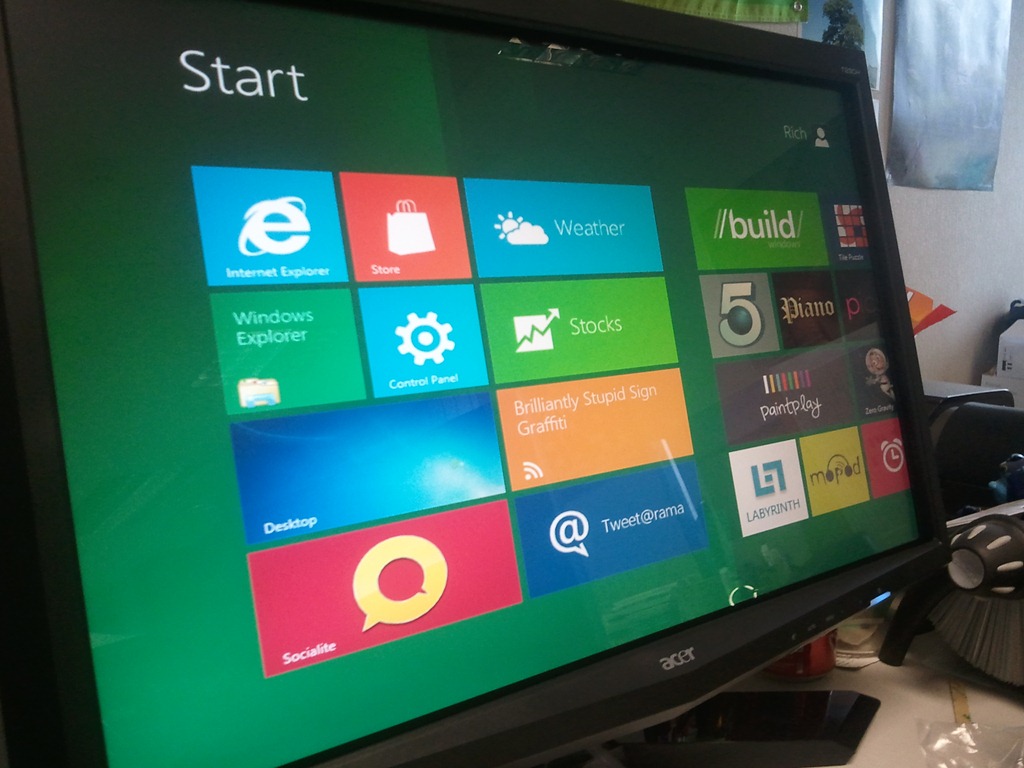
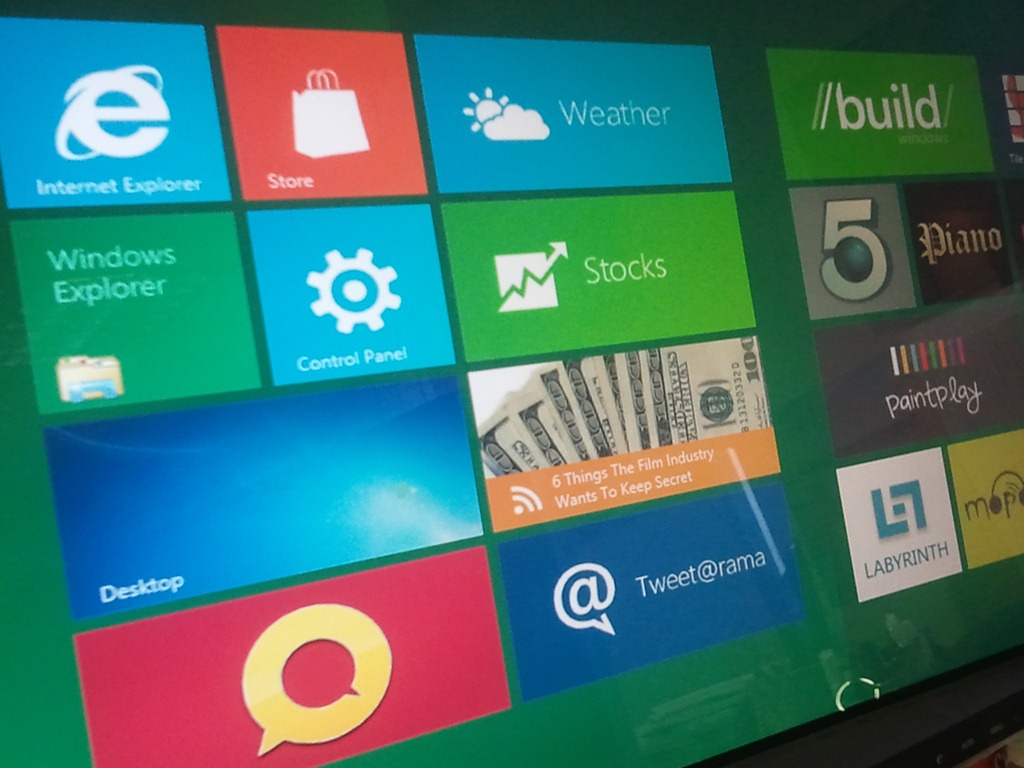
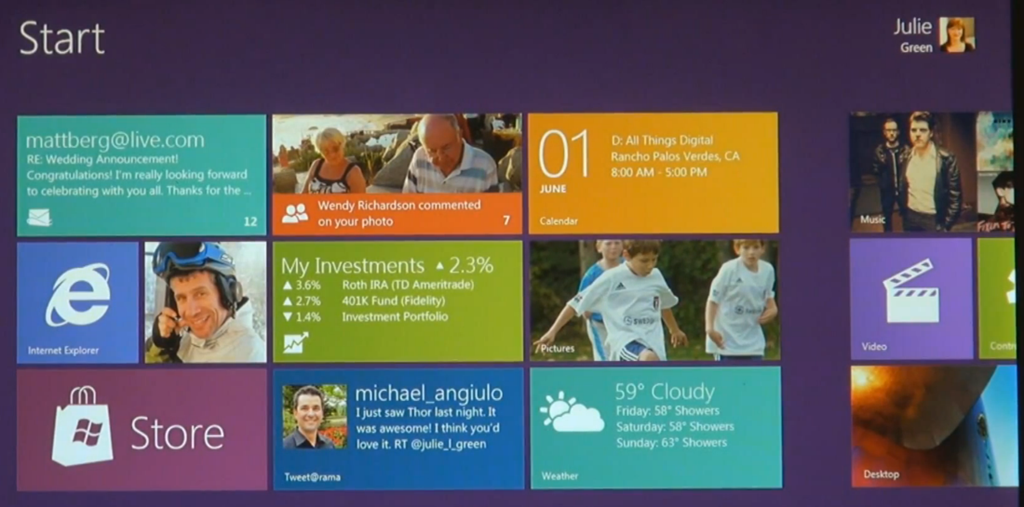
Microsoft Windows 8 has been officially demoed and it looks pretty great, with it’s Windows Phone 7 inspired tile interface.
There are other new features being discovered by people who have the leaked pre beta builds and one of them is pretty great:
Windows 8 Center have got a screen shot which shows this:
This would be a brilliant addition. All my main machines have got Magic Disc & Magic ISO on them simply so I can mount ISO’s as and when needed. However it’s really annoying when you get a new machine and/or you’re working on someone else’s machine…you go to mount an ISO..BOOM – no can do, so you’ve got to go and download/install them. This new addition will save quite a lot of time across the IT Industry I would imagine ![]()
This will also be cool, again saving users from one extra download and extra bit of 3rd party software on their machine.
On paper, SkyDrive is awesome. 25GB of storage that you can access pretty much wherever and use either for personal storage alone or also to share things such as datasheets, documents etc with friends, clients, partners and more.
In practice, it’s quite difficult to use…fiddly, hard to find, not quite as easy to get things into/out of as you thought.
Integrating it straight into Windows 8 will see a massive rise in the use of Microsoft’s online storage, and will make the tablet piece even more compelling as users will have a built in, free, easy to use way of sharing/syncing quite a lot of “stuff” available immediately.
Microsoft’s Excel is THE de facto spread-sheet program, pretty much everyone turns to Excel if they need to do something with numbers.
Tax returns, finances, holiday charts, sales figures, bonus calculations, project progress and many many more are all common uses for Excel sheets in 1000’s of businesses all over the world. This means there is an almost incalculable amount of business data buried in .xls/x files, only a handful of people know the document exists and even fewer people know where the document is stored <—that’s usually how it goes!
This problem isn’t limited just to Excel files, there has been a huge proliferation in Word documents, project files, pdf’s, Sharepoint sites…even SQL Databases, all strewn across an organization’s estate with little discoverability. This makes it hard for users to properly act upon data and also makes it much more difficult administrators to update and change parts of their infrastructure. Microsoft have decided it’s time to do something about this and so was born:
There are 3 “buckets” of components to this project:
Microsoft will provide crawlers for various Microsoft products including:
These will extract metadata & “Enterprise Dataflow” information which will be indexed in the Barcelona server. If the data source cannot be crawled then a “declarative way of describing the metadata and dataflow information” will be provided. A neat feature is that it will support auto discovery of new target sources which will reduce the amount of on-going user/admin interaction needed to make it a success.
This will be the cache for all the metadata & dataflow info collected. It will also allow querying, augmenting and annotating of the data via an exposed API.
Initially there will be 2 tools:
An Admin experience to manage the crawlers & Index server.
A DBA experience for things such as renaming columns, retiring servers etc.
The overall architecture will look like this:
This is a great idea, something that will be very useful to a huge number of companies across all sectors and in many different ways. I can definitely see this fitting into my discussions with customers very well. I have multiple conversations each week with companies hoping to discover:
when it comes to software licensing and also hardware. Being able to do the same thing for data is surely something that customers are already wishing to do?
There are some quotes from Andrew Conrad of the Project Barcelona team that show Microsoft’s thoughts and plans for this:
“although we are designing the first iteration of the product to be a DBA/ ETL developer solution, we believe that the long term value will grow significantly beyond this”
“developers can plug in their own crawlers or metadata providers.”
“we will support metadata augmentation and have rich annotation support (both crawler support and via server API) which will allow producers and consumers of the system to leverage the crawlers and Index server in ways we haven’t even thought about”
“One of our goals for Project Barcelona is customer driven innovation”
We “really want to work with the community on the design and feature prioritization”
“we strongly believe we will need significant feedback before landing on the right design and feature set. Hence, to accelerate the feedback loop, in addition to shipping a number of CTP releases, we plan on being very transparent on our design plans via this blog”
These give a great insight into how Project Barcelona will progress and it looks good to me. A clear focus on customer insights, ideas and requests is always positive.
To read more on this interesting and surely one day to be a product that gets RTM’d, head over to:
You can also follow them on Twitter @projbarcelona
One last thing, the team are jokingly calling this “Marauders Map”, a reference to the Harry Potter map that shows the location of each & every person! ![]()
Microsoft’s top level licensing model, the Enterprise Agreement, has recently been overhauled to make it more cloud friendly…which is a good thing for organisations looking to adopt this new model now, or in the future.
The Enterprise Agreement (EA) is Microsoft’s highest level model, for companies of 250 seats and above. It requires an Enterprise Wide (EW) licensing commitment, includes Software Assurance (SA) on all licences and offers the best discounts.
The common way for an organization to licence under the EA is with the “Professional Desktop”, comprised of:
The Core CAL itself is a bundle, comprised of:
With the exception of Windows Server & SCCM, all these products are now available online via Office 365 and Intune.
If a company with an existing EA wanted to take advantage of these products, they would be on top of their existing Professional Desktop licences, as they are required to maintain the Enterprise Wide commitment. This would mean double licensing, not an effective use of budget and of course, not the way customers want to do things.
So in a very quick move, Microsoft have produced an amendment to their Enterprise Agreement terms making it possible for organizations to “mix & match” between online & onsite licensing.
Windows OS –> Windows Intune
Office –> Office 365 E3 or E4
Core CAL –> Core Bridge
Enterprise CAL –> ECAL Bridge
Bridge CALs are a new licensing item that bridge the gap between the CAL suites and their closest online relatives.
For the Core CAL offering, the bridge CAL covers the organization for:
thus completing the Enterprise Wide commitment, without duplicating any functionality and keeping them compliant with the contract terms.
The following diagram gives a good example of how the online and onsite licensing models can co-exist within an organization.
There are certain differences when it comes to the Software Assurance benefits available with Online products too, for example:
Windows Intune does NOT give
There are a variety of different combinations possible when it comes to these licensing scenarios, some more complex than others! I have left out a fair amount of information from this post as I don’t want to cause confusion, however if you have a specific scenario I would be more than happy to help ![]()
It’s great to see Microsoft making such changes as this and at such a good speed. Many people criticised Microsoft for taking too long to update their licensing models to accommodate the changes brought about by Virtualisation and, while that may be true, Redmond are definitely ahead of the curve this time!