
Microsoft released SQL Server 2025 on November 18th 2025 and updated the Product Terms. However, the update has caused confusion and consternation amongst the Microsoft community – as it seems to suggest that failover rights as a Software Assurance benefit have been removed!!! 😱 (Spoiler alert – it’s almost certain they haven’t).
If you’re not familiar with this right it means, in a nutshell, that organisations who purchase SQL Server licenses with Software Assurance (SA) may license additional servers at no extra cost, as long as those servers are used only for disaster recovery/failover purposes. This is a long standing and widely used benefit – removing this right will mean one of 2 things:
- Organisations’ SQL Server licensing will double/triple by millions of £/$/€ more per year
- Organisations will be forced to have less resilient SQL Server systems, potentially leading to more downtime and lost revenue
Ultimately, if either of those were the case, I believe it would lead to a mass exodus of SQL Server customers. Microsoft may hope they would move to SQL Azure/SQL Server enabled by Azure Arc but I’d expect many to explore other options – Oracle, Postgres, Amazon RDS etc.
Largely because of that, and the fact that we have seen an increase in Product Terms errors over the last couple of years, I’m of the opinion that it is an error and will – eventually – be corrected…but it is worth looking at anyway.
As I was about to press publish, Peter Van Uden has commented on LinkedIn that he’s had confirmation that it is an error and will be corrected in the coming days.
Fellow Microsoft watcher Alex Golev noticed that the whole section had been deleted without replacement:
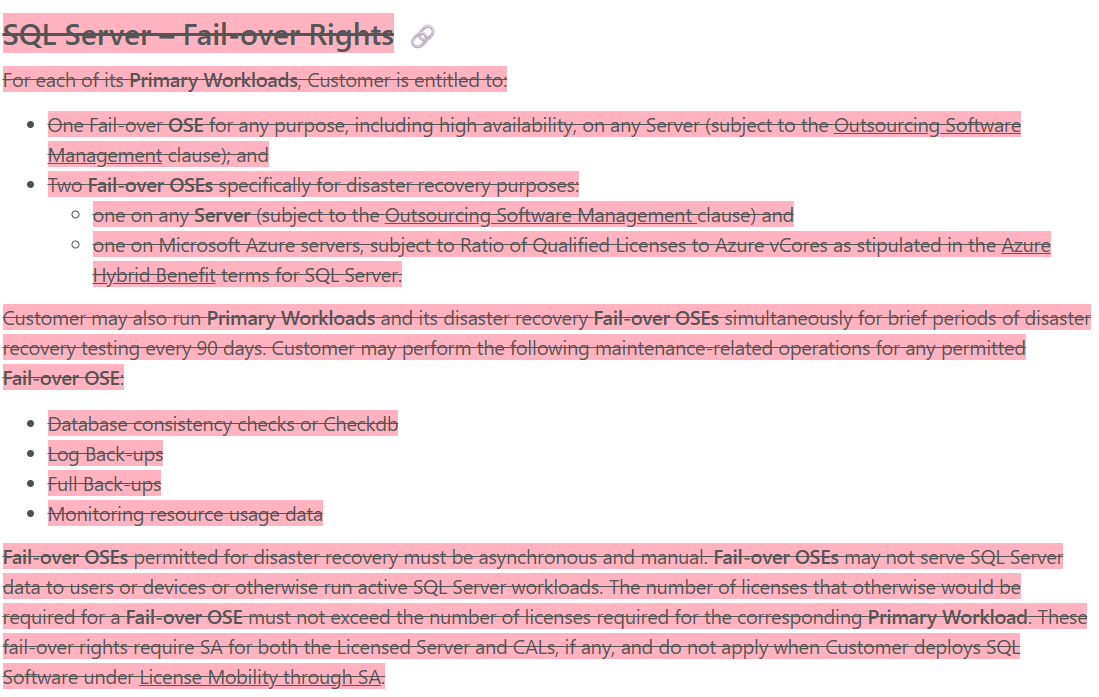
Other parts of the Product Terms still refer to this section which suggests this is an erroneous deletion…but it could also mean that they just didn’t edit those sections correctly.
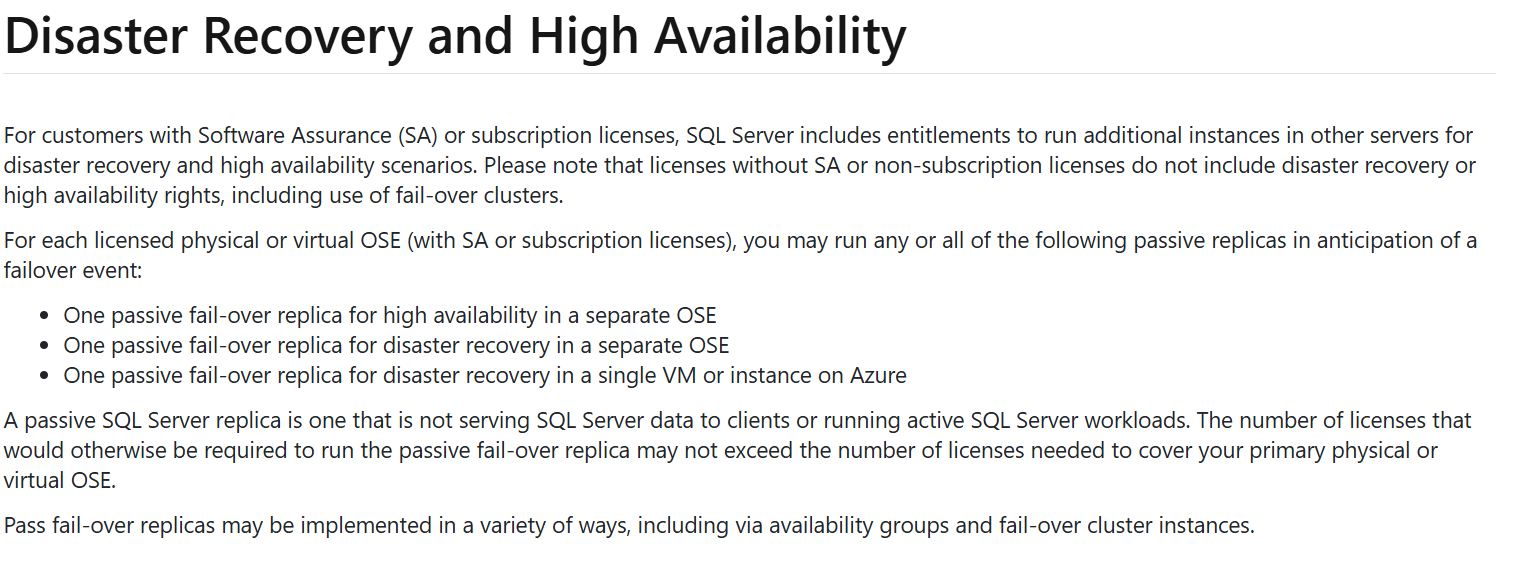
This Microsoft page – https://www.microsoft.com/licensing/guidance/SQL?msockid=144db73d53b469e721fda347528468b6 which is licensing guidance for SQL Server 2025 still contains the failover rights information:
I genuinely believe this is an error. It is a huge change that would have significant consequences for most Microsoft customers, including their largest and most significant customers. Making this change would be an enormous risk and to do so without any official announcement or warning is unbelievable. I’m sure we’ll see a reversal in the coming days and that’s why I haven’t posted about this already.
However, I feel it does highlight the increasingly slapdash approach that has been taken to the Microsoft Product Terms since it became an online site, rather than document downloads. It seems likely to me that updates are being made by people with little understanding of software licensing and so they don’t see the consequence of their actions.
The fact that it’s 4 days since this change was made and there has been no word from Microsoft is disappointing – but hopefully that correction will appear soon.
So, don’t panic but do remember that these things happen and that Microsoft experts like me, Alex, Peter and more can be very useful in these scenarios. 😁
Update: The missing text has been reinstated so the panic is over. It does highlight the need for us all to be vigilant in the future though.

 Cloudy with a chance of Licensing