Microsoft announces Azure Savings Plan for Databases


Microsoft has announced “Savings Plan for Databases” – a new option to manage Azure cloud costs, alongside the existing “Savings Plan for Compute”.

Just like the AWS version (announced in December 2025), this helps organisations reduce spend on certain databases while giving additional freedom when compared to Reserved Instances – but, due to the added flexibility, giving lower discount levels.

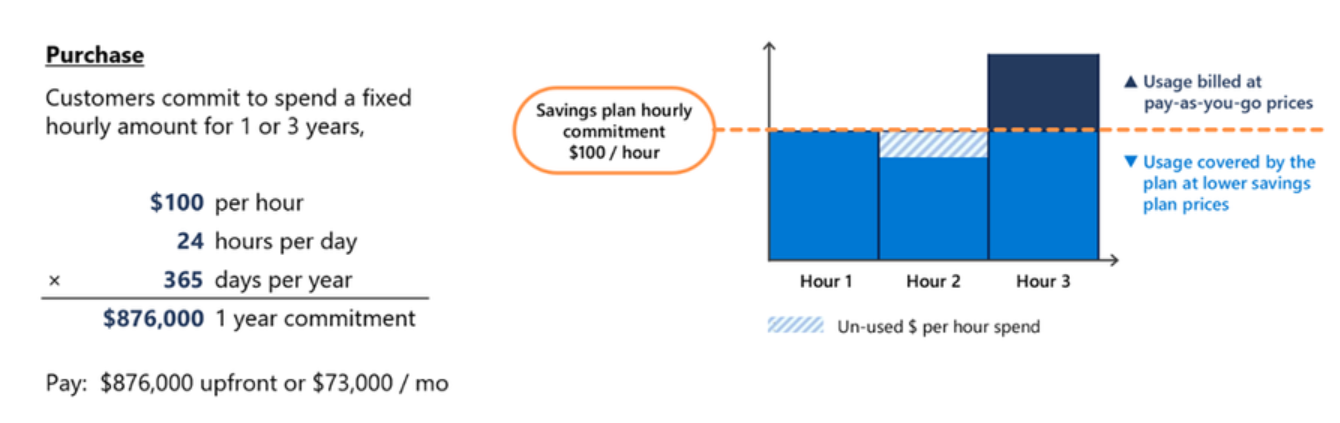
Rather than committing to a specific service/region etc., Savings Plans allow you to commit to a level of hourly spend that can be applied across a range of services.

Savings Plans for Databases are worth considering when you have a predictable baseline of database spend but still need flexibility in how that spend is consumed. If your environment includes multiple database engines, regions, or services that change over time, committing to a fixed hourly spend can unlock savings without being as specific as with Reserved Instances.

They are particularly useful where workloads are steady in aggregate but variable at an individual service level. If you can reliably forecast a minimum level of database spend each hour, a savings plan can reduce costs while preserving freedom.
Announcing savings plan for databases: flexible savings for modern, evolving workloads | Microsoft Community Hub

What services are covered?

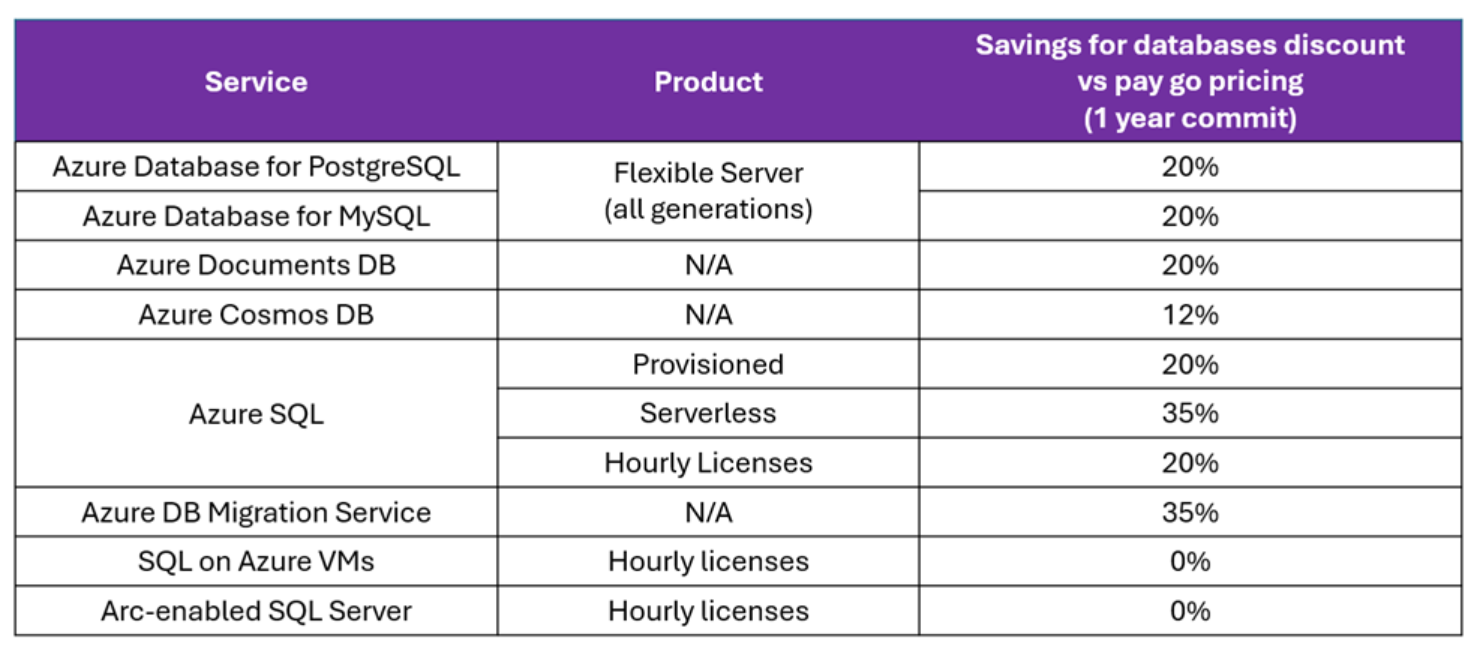
A range of database options, including Cosmos DB, are covered with discount levels varying:
Announcing savings plan for databases: flexible savings for modern, evolving workloads | Microsoft Community Hub

It seems these new Savings Plans are available just in 1-year variants and, assuming they follow the same method as Savings Plan for Compute, can be paid for upfront or monthly with no impact to the total amount.

This announcement helps bring Azure to parity with AWS (in this area) and will enable some organisations to make additional savings. As always, be sure to work out how it will apply to your specific contract and scenario.

See more from Microsoft here – Announcing savings plan for databases: flexible savings for modern, evolving workloads | Microsoft Community Hub

Flexera acquire ProsperOps and Chaos Genius


Flexera have kicked 2026 off with a bang!

They’ve acquired both ProsperOps and Chaos Genius – further adding to their FinOps portfolio after their recent acquisition of Spot from NetApp…and their 2018 acquisition of RightScale of course.

ProsperOps focuses on automated cloud commitment and resource management while Chaos Genius focuses on automated savings and management of Databricks and Snowflake costs.

The convergence of software spend is here and getting bigger. Whether something is on-prem, SaaS, Cloud, Data Cloud, AI etc. matters less and isn’t always easy to define as more and more services span multiple billing models. For customer organisations being able to see technology spend holistically is more important than ever and these purchases give Flexera some real end to end software spend coverage from on-premises through SaaS and Cloud.

Some orgs will prefer to go with multiple point products, which is a perfectly viable option that can work better for certain types of business. Others prefer a platform – one foundation that gives the info they need across the business – and Flexera are, in my opinion, probably the leader in that space now. Adding Databricks and Snowflake cost management into their portfolio is a great move and puts them at the forefront of conversations around boardrooms…

The Flexera announcement is here – https://www.flexera.com/about-us/press-center/flexera-expands-its-finops-solution-with-agentic-and-ai-enabled-cost-optimization

Microsoft Azure Storage Discovery


Microsoft have a new (currently in preview) service to give more visibility into your Azure Blob storage.

Azure Storage Discovery will:

  • Measure how much data is stored across all storage accounts
  • Identify regions experiencing the highest growth
  • Find opportunities to reduce costs by locating infrequently used data
  • Assess whether storage configurations align with security and compliance best practices
https://learn.microsoft.com/en-us/azure/storage-discovery/overview

Storage is often a source of hidden spend (and waste) in the cloud, so this may well be a useful weapon in your arsenal.

How is it priced?

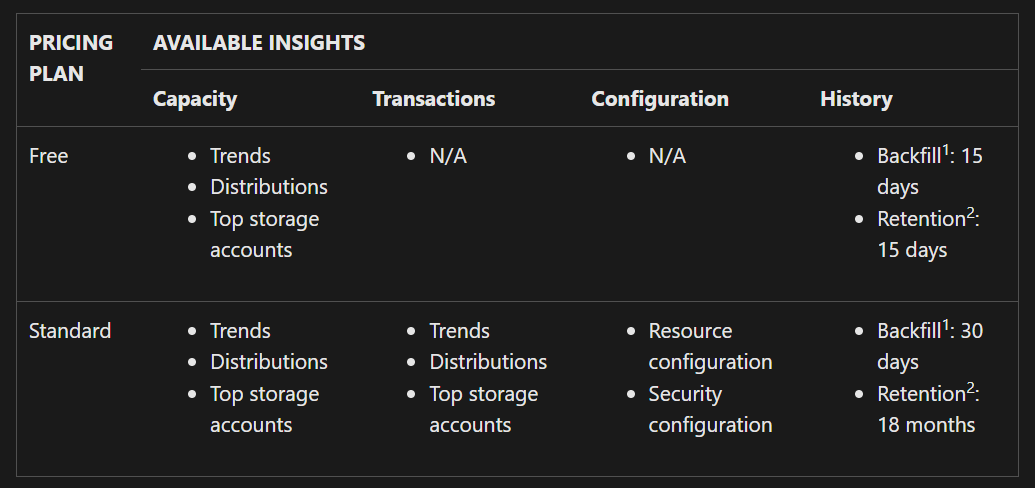
There is a Free tier and also a paid-for Standard tier.

https://learn.microsoft.com/en-us/azure/storage-discovery/pricing

1 The backfill feature automatically adds historic data into a Storage Discovery workspace from before the workspace is created.
2 Every workspace retains insights for some time to allow for historical analysis.

The total cost will be comprised of:

  • Pricing plan
  • Workspace configuration
  • Number of storage resources & data objects analysed

Note that a storage resource can be included in multiple workspaces and will be charged in each one.

How much will all this cost? As the service is in Preview, and you’re able to use it for free, Microsoft haven’t released pricing details. These will become available on Azure.com before October 1, 2025, when billing kicks in.

To find out more about what it does and how it works, head here.

ITAM & FinOps Tools: A crowdsourced list


I get a lot of questions about ITAM, SaaS, & FinOps tools – what is available, what do they do, which are the best etc.

The ITAM market has quite a few tools, there are several SaaS tools, and the FinOps tool market is huge…unnecessarily so some may say. This presents (at least) 2 problems:

  • Potential customers are overwhelmed and don’t know where to start
  • Genuinely innovative tools can be lost in a sea of marketing and promotion

In an attempt to help bring some clarity, I’ve started a crowd-sourced tool list here:

https://airtable.com/appEKdAtvVzFxTc0w/shrkDzHsUBHoEVK21

that currently contains 147 records…this has increase by 14% in the last 2 weeks!

The initial aim is to have a centrally available list of all the tools with some high level categorisation i.e. “SAM”, “FinOps”, “AWS only” etc. From there, I hope to add more info to help people dig deeper. Let me know what would be helpful for you!

If you think I’ve missed any – please add them here:

https://airtable.com/appEKdAtvVzFxTc0w/pagE5AfnBAh50K6ZC/form